Overview
What is Nitrate Watch?
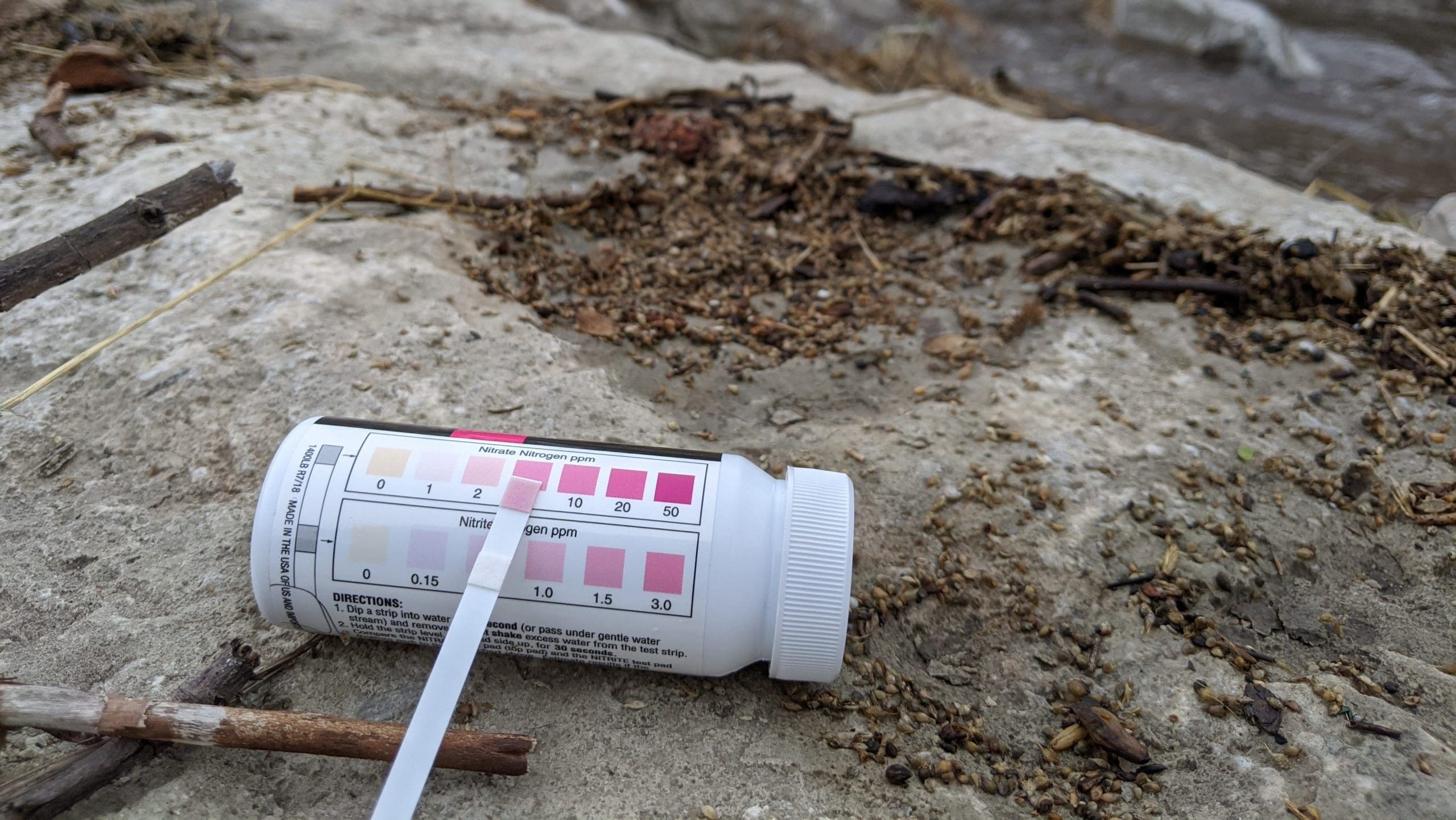
Nitrate Watch is a crowd-sourced community science project that equips volunteers and partner organizations with nitrate test strips to monitor their water, share their results, and advocate for solutions.
With Nitrate Watch, residents can take testing into their own hands. Whether monitoring contamination levels in drinking water from your private well or testing the quality of lakes, rivers and streams most important to you and your family, these free test kits provide everything you need to quickly and easily measure contamination levels near you.
By giving residents the tools to test their own wells, Clean Wisconsin and our partners hope to make groundwater testing more accessible and build a more comprehensive database of contamination hotspots around Wisconsin. More data means we’ll be better equipped to push for stronger water quality standards and ensure every Wisconsinite can trust the water coming out of their sink.
Nitrate Watch is run by the Izaak Walton League of America. Clean Wisconsin is a proud Nitrate Watch partner.
Take Action
Get Involved and Test Your Own Water
Anyone can sign up to receive a kit of 25 strips to test their own or their neighbors’ private wells, or any lake, stream or river they care about. These kits are completely free of charge. Make Nitrate Watch part of your regular routine. Use this worksheet to make a plan and get the most out of your test kit. Once you run out of test strips, simply sign up for more!
Testing is easy and quick. Be sure to list Clean Wisconsin as your organization when you sign up so we can summarize the data from all around the state.
Things to consider before and after testing
- Participants of Nitrate Watch who have a private well for drinking water are encouraged to use the nitrate test strips to give you an idea of contamination levels.
- The best times of the year to test your well water are when it is most likely to be unsafe. Statistically these times occur following a period of heavy snowmelt in early spring or during the hot stagnant time of late summer and early fall.
- Water quality can change over time! It is important that testing becomes a regular routine.
- If a contaminant is detected in your well, this result does not necessarily mean your health will be affected. However, we want to provide information on potential health risks you should be aware of. Please review our environmental health brief on nitrates in drinking water.
- If your well is contaminated, check out this resource to help protect you and your family from potential health harms: 6 steps for private well owners to keep their drinking water safe
- Please note that these test strips are not an official well test. If the strip reads levels above 10mg/L, you should test your water through a certified lab.
- Remember “All Data is Good Data,” including test results of zero!
Request your testing kit today through the form on this page.
Submit data to the Clean Water Hub
The Clean Water Hub is a collaborative tool to help people just like you track water quality in local streams, lakes, and even drinking water. It’s a place to share your local data results so that we can make an impact. The Clean Water Hub enables you to play an active role in the act of conserving, monitoring, and restoring the quality of our nation’s streams and rivers.
Be sure to list Clean Wisconsin as your organization when you submit your data so we can track results around the state. Struggling to submit your findings? Check out this video from the Izaak Walton League for step-by-step instructions.
Frequently Asked Questions
Nitrate Watch FAQs
Where does nitrate come from?
Nitrate is formed when nitrogen combines with oxygen in water. It occurs naturally in plants, including in many vegetables that we eat. It also comes from human-made sources, including fertilizers, animal feedlots, and sewage. Nitrate dissolves in water and can easily be carried by rainwater and melting snow until it reaches surface water or groundwater. When there are elevated levels of nitrate in a water source, that’s almost certainly because of human-made contaminants.
Why is excess nitrate bad for human health?
When we consume too much nitrate, that can make it harder for our blood to transport oxygen. In infants younger than six months, that can lead to a condition called Blue Baby Syndrome, which can cause the skin to turn blueish-gray and may lead to serious illness or death.
Ongoing research has found that other health conditions are also linked to consuming high levels of nitrate. Peer-reviewed studies document increased risk of colon cancer, thyroid disease, and neural tube birth defects, like spina bifida and anencephaly, in populations with prolonged exposure to drinking water contaminated with nitrate.
What comes in my Nitrate Watch test kit?
Your kit will include a bottle of 25 easy-to-use test strips, plus two postcards with all the information you need to take nitrate readings and submit your results. To use your kit, you’ll need access to a stream, and a computer or smartphone so you can submit your findings.
What kinds of water sources can I test with my Nitrate Watch kit?
Pick water sources that are meaningful to you for recreation, drinking or conservation! Test multiple locations so you can compare the results, but also save some strips to test the same locations again later and see how nitrate levels have changed.
I don’t live near an agricultural area. Should I still be concerned about nitrate pollution?
Yes. There are plenty of non-agricultural sources of nitrate, including outdated sewage treatment plants, malfunctioning septic systems, landfills, and residential and commercial properties (like golf courses) that apply large amounts of chemical fertilizer.
I live in town and get my water from my local water utility. Is my water being monitored for nitrates and other contaminants?
Public water systems are required by the Wisconsin Department of Natural Resources to test for nitrate regularly, as well as a slew of other potential contaminants. If your Nitrate Watch test strip shows a high nitrate reading, you should contact your local water utility.