


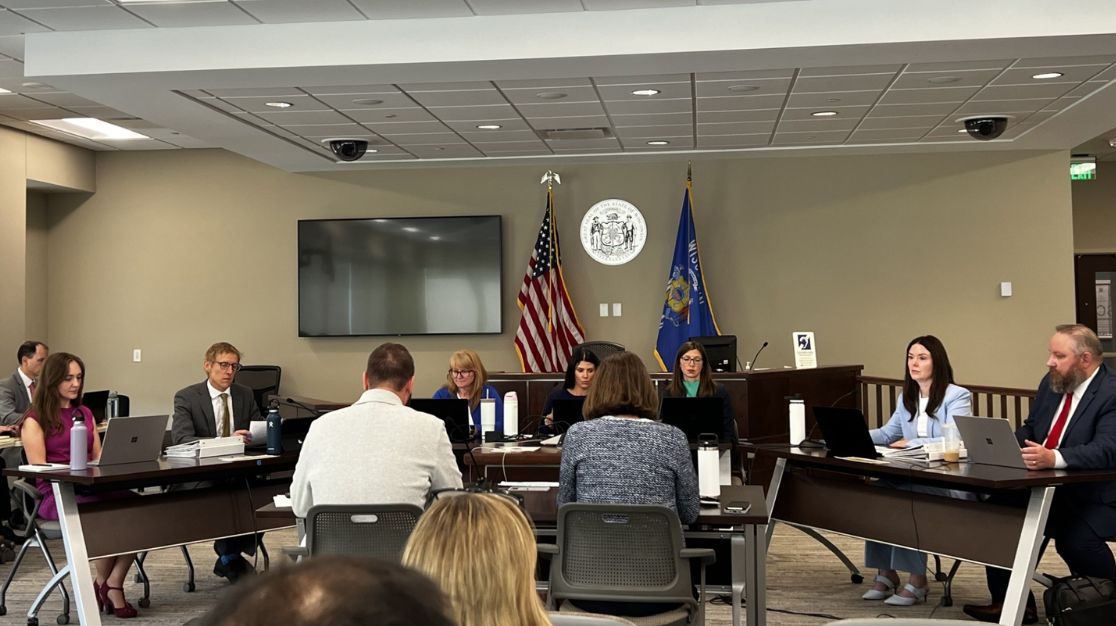
PSC cases will answer fundamental questions about data center energy costs
Wisconsin is bracing for unprecedented electricity demand driven by massive new AI data centers. These facilities can consume as much energy as entire cities, and utilities are rushing to build the infrastructure needed to power them. But fundamental questions remain about what these data centers will mean for Wisconsinites’ electricity bills and the state’s clean energy goals.
Clean Wisconsin is working to ensure protections are in place for both utility customers and our environment. In two major cases before the Public Service Commission of Wisconsin (PSC), we are advocating for a consistent approach to serving these new “very large customers”—one that holds them financially accountable and ensures tech companies are using as much clean energy as possible to power their data centers.
Clean Wisconsin supports utilities’ use of “tariffs” to serve data centers. In this context, tariffs are standardized pricing structures that define how classes of customers, such as the proposed “very large customer” class that includes data centers, pay for electricity and the infrastructure needed to serve them. Done right, tariffs can provide a framework to ensure companies driving massive new demand must cover the costs they impose on the system, rather than shifting those costs to families and small businesses.
That’s why, in a case involving We Energies, Clean Wisconsin supports the utility’s plan to use a tariff specifically designed for large data center customers. But as currently written, the proposal leaves too much room for cost-shifting and unnecessarily prohibits many clean energy resources from meeting data center demand.
Our analysis shows that without modifications, the tariff could allow data centers to rely too heavily on shared infrastructure and market energy purchases, both of which could drive up costs for other customers. It could also limit the use of cleaner energy resources, even as both the state of Wisconsin and many of these companies have committed to ambitious climate goals. Clean Wisconsin is urging regulators to approve the tariff only if it is strengthened to ensure data centers fully pay their way and that their energy demand is met, as much as possible, with clean resources.
By requiring large customers to be responsible for their own energy resources and allowing flexible solutions like energy storage and demand response, regulators can reduce strain on the grid while opening the door to cleaner, more efficient ways of meeting demand. We are also pushing to align the tariff with Wisconsin’s longstanding energy priorities law to help ensure that new demand is served by as much clean and renewable energy as possible.
In a separate case involving Alliant Energy, the issue is not how a tariff is designed, but whether one is used at all. Alliant has proposed serving Meta’s new data center in Beaver Dam through a special contract rather than a tariff. Clean Wisconsin is pushing back, because contracts negotiated behind closed doors lack the transparency and consistency needed to protect the public interest. As more data centers look to locate in Wisconsin, we can’t rely on a patchwork of one-off agreements where costs and responsibilities are unclear. Using well-designed tariffs would help ensure that all large customers are treated consistently and that the rules governing cost and energy generation are applied fairly.
The rapid deployment of AI data centers is one of the most pressing environmental issues in our state. These cases will answer fundamental questions about Wisconsin’s energy future: How much will data centers rely on polluting fossil fuels? Will utility customers see skyrocketing bills? Or will regulators ensure data centers cover all their costs and enable clean energy to reduce strain on our grid?
We are grateful to our many members who submitted comments and testified at the hearings in these dockets before the PSC. We expect decisions from the PSC later this spring.
