

Where to Listen:




A circuit court judge is deciding whether permits issued by the state allowing Enbridge to build its Line 5 pipeline reroute in Wisconsin’s Northwoods are legal. But in the meantime, he is allowing work on the new Line 5 to continue — except in a few key places.
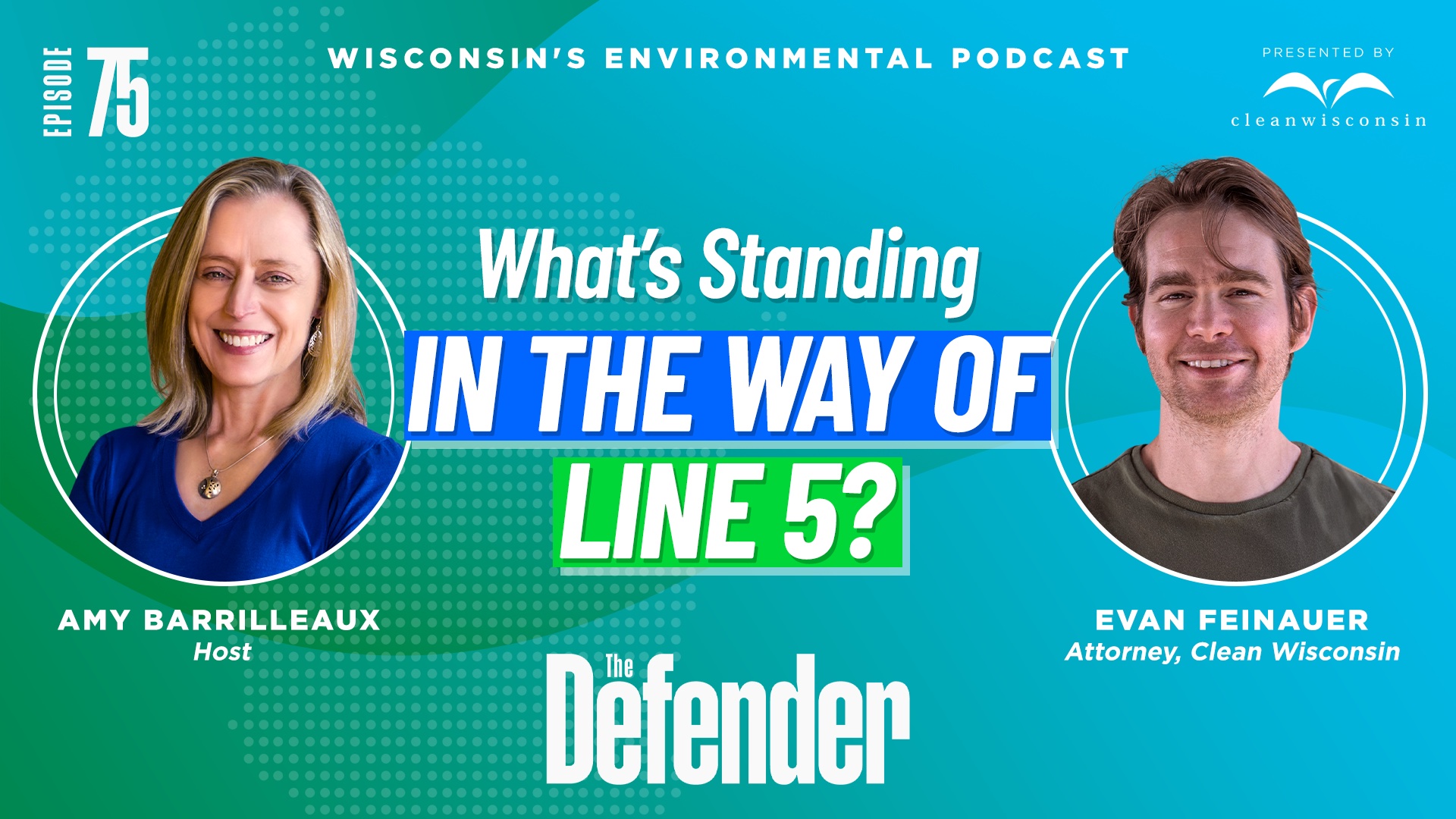
In this episode Amy talks with Clean Wisconsin attorney Evan Feinauer about the new court decision that’s putting some Line 5 construction on hold.
Host:
Amy Barrilleaux
Guest:
Evan Feinauer, Clean Wisconsin attorney
Resources for You:
Wisconsin: One one of the Most Important Places om Earth (Video)
Transcript:
Amy Hi there and welcome to the Defender Wisconsin’s environmental podcast, I’m Amy Barrilleaux. The Defender is powered by Clean Wisconsin, your environmental voice since 1970. If you pay attention to the news, you’ve probably heard about Line 5. That’s the 1950s-era Canadian pipeline that brings oil from the Alberta tar sands across the Bad River Band of Lake Superior Chippewa Reservation, through Wisconsin’s Northwoods, under the Straits of Mackinac and then back up to refineries in Canada. A few years ago, a court found that Canadian oil giant Enbridge, which owns the pipeline, is in trespass on Bad River land and the old Line 5 cannot stay on the reservation. So Enbridge is working on a new reroute of the line that would bypass the reservation but still risk economic and environmental devastation in the event of a spill. And construction cuts through some of the most pristine, valuable natural areas of state. Last year, Wisconsin’s Department of Natural Resources issued permits allowing the foreign company to start blasting and trenching its way across hundreds of waterways in the North Woods to make way for the pipeline, but Clean Wisconsin contends those permits are illegal. And at this moment, questions over a handful of those water-crossing approvals are what stand in the way of Enbridge being able to complete its new pipeline in our state. I’ll talk with attorney Evan Feinhauer about clean Wisconsin’s lawsuit against the DNR and the latest court order centered on those approvals. That’s right now on The Defender. A circuit court judge is deciding whether permits issued by the state allowing Enbridge to build its Line 5 pipeline reroute in the Northwoods are legal. But in the meantime, he is allowing work on the new Line 5 to continue except in a few key places. Joining me is Clean Wisconsin attorney Evan Feinauer who’s working on the lawsuit filed last year. Evan, thanks so much for being here.
Evan It’s great to be here.
Amy So a judge has ruled that there are a handful of these water bodies that Enbridge cannot cross with its pipeline right now while he’s still considering the case against the project as a whole. He issued what’s called a stay on construction for these specific places. So what’s the deal with these waterbodies? Why are they special or are they super significant or what’s going on?
Evan Yeah, so it’s important to take a step back and recall that this lawsuit is a challenge to not one, but multiple different kinds of DNR approvals. This is a 41-mile stretch of construction involving a whole range of construction activities there and across wetlands and water bodies of different sizes using different methods, so they needed a bunch of different approvals, so … The short answer, and I can give a longer answer too, but the short answer is that it was one of those approvals that we challenged that the judge in circuit court looked at and said, yeah, I think you’re right about this. I don’t think that this permit was legally issued. So I’m gonna stay activities that are authorized under that set of permits, which is the four waters that you mentioned. But for now, I’m going to let the other stuff move forward because you haven’t shown me enough at this point that those are likely enough to be illegal at the end of the day that I’m to stop them from going into effect today. That’s because of the way a stay request works in Circuit Court in Wisconsin and in other courts elsewhere is the court is trying to look at, well, what’s the bad thing that’s going to happen if I don’t stop this construction from going forward? But I also have to think, is this person shown me enough that I believe that they’re win on the merits of this case at the end of the day. Because I don’t want to stop something and then later decide, well, it was totally legal the whole time. And he just sort of got there with the permits that concerned those four waterway crossings but not the others. And obviously we disagree and we asked him to and hoped he had stayed the entire project but that’s not the decision we got.
Amy So with this, because it’s a pipeline and oil needs to move through it, it really can’t be finished unless it crosses these water bodies, you’re not going to be able to put oil through. So there’s construction happening certainly up in these indeed sensitive areas of northern Wisconsin. Enbridge is doing a lot of that trenching and digging and blasting and those kinds activities that we were very, and still are, concerned about and are very… Destructive to that pristine environment, but in terms of actually completing it and pushing oil through, right now at least they cannot cross those four sensitive waterways. Is that right?
Evan Yeah, and this gets to… What I was saying earlier about there being different construction methods. So to cross their water body, you can do it in a couple of different ways. If it’s too complicated to cross the water body you can actually go under it with something called horizontal directional drilling, which they are doing at some water bodies. These were the crossings that required a particular kind of permit. It’s very clear in the law that you can only get those permits if you are the owner of the land, if you’re the riparian owner of the land and number two is not. And so it’s kind of this threshold issue that I think was easier for the judge to understand. And that had more to do with it than these waterway crossings being significant in terms of what kind of puzzle piece they are in the construction. So because of that, now we have these four waterways they can’t cross. That doesn’t mean that they can be doing construction activities, they are. You know, they’re doing prep work, they’re cutting down trees, they’re getting everything ready. They’re gonna start trenching and blasting over the summer here. And that’s unfortunately gonna be happening because we didn’t get the circuit court to stop it. If you’re trying to be glass half full about it though, what this shows is that our case is strong that for many of these waterway crossings, they are not even eligible to get the permits in the first instance. And we think that there are a lot more waterway crossing that the judge will ultimately decide that yeah, they’re not eligible for these either. Uh, there’s a distinction, you know, I won’t get too much into it, but different parts of the regulations cover different kinds of waterway crossing permits. Or I should say prints for different kinds of activities in and around waterways. And I think the, the court declined to stop construction activities at a larger number of crossings based on a distinction that we’ll later be able to show, um, doesn’t really matter in terms of legality. So I think that when we get a ruling on the merits that they also will be able to cross a much larger number of waters as well, in addition to the wetland impacts and the other issues in the case.
Amy So basically, the DNR issued permits, a whole lot of different permits to Enbridge to be able to do this. I mean, this is a big project. It goes over a huge portion of northern Wisconsin, a lot of kinds of permits were needed. But they issued these permits in particular that Enbridge was supposed to be, or would have to be the landowner in order to get these permits, and Enbridge is not the land owner. So, uh… How surprised were you that the DNR issued these permits in the first place when from what, you know, this judge is saying and what you’re saying, it seems like that was not the thing to do.
Evan Yeah, it’s a little bit of a head scratcher. I mean, this is something that we flagged, you know, we being Clean Wisconsin and our co-litigants in the case years ago. I mean, well before the permits ever issued, we noted, hey, statute says they have to be the riparian owners and they aren’t, so what’s the deal with that? The position that the department is taking is that, you know gee, requiring somebody to own the land they’re doing these activities on. It seems like a lot to ask when they’re not, you know, it’s not like they’re permanently building like a building in the river or something. They’re putting structures there that they need to do for construction and then they’ll do all the construction and they’ll lay the pipe and then later the structures will be gone. And so, you who really cares? The problem with that is the statute couldn’t be more clearly written. And the background here is interesting. And the reason the statute says that is because a bunch of people were… Trying to do activities that are regulated by law in waterways and they weren’t the riparian owners. And the state legislature said, we really don’t like that. And so we’re gonna put into the law a very clear statement that you need to be the riprian owner and that you can’t do these workarounds where you say, well, we don’t own it, but the person who does own it gave us the thumbs up and said that it was fine. Well, of course, that doesn’t make any sense, because that’s just a complete workaround of what the legislature was trying to say you can’t. And the reason this matters, some of the famous examples of why this was important was these cases of developers coming in and trying to build like dockominiums and things like this, where somebody was coming in and they were kind of using the riparian owner’s land to engage in some side of business or commercial enterprise to make themselves money. It wasn’t clear that it was totally always consistent with kind of the public good, which is important because these are waters that are protected by the public trust doctrine and they’re supposed to be kind of a public-minded management of these waters, and so allowing a private party to kind of go through somebody else’s ownership for their own economic purposes isn’t really consistent with the thrust of the trust doctrine, and I think the legislature got that right by making a very clear requirement in the law. So why they thought they could use this workaround? I think just because DNR let other people get away with it in the past and nobody’s ever called them out on it. I mean, in our case, the judge said, you know, disappointing the fact that you’ve done it before doesn’t make it legal, which I think even non-lawyers can understand. So that’s kind of where we’re at. I don’t want to speculate about why they were so confident that this was a good idea given what I think is pretty clear law on this, but it’s a problem and it’s a problem that the circuit court has now agreed with us about.
Amy And you keep using this term, riparian owner, what does that mean for us non-lawyer folks out here?
Evan If you own land that’s on the water, you have an interesting relationship with your property compared to somebody who owns land that doesn’t have any water on it. That’s because, I mean, two things are true, right? We have strong property rights, you own your land, that means you get to exclude people and you get do a lot of things on your land subject to regulation, but it’s your land. Right? But that gets complicated when then our waterways are… uh, not privately owned, but the, you know, the title of those waters is held in trust by the state for the benefit of all Wisconsin residents and citizens. And so you’ve got this two adjacent areas that are butting up against each other, one that’s private and you get to do with it, whatever you want. And the other needs to be public. And so the obvious collision course of this is things like you want to put in a pier, well, it’s your land. You should be able to, you know, put in a pier and have boat access to the river that you just bought land on, but of course, if the pier is too big. Or it’s obnoxious or it is not safe, then that’s a problem for everybody else who is a member of the public that gets to use the water. So there’s these long line drawing problems and that’s why they had to create this category of sort of riparian rights that you as somebody who owns lands along water have rights to do certain things in those water. They’re kind of qualified really just by then what the Public Trust Doctrine says is like, yeah, but the public has their public interests and DNR is gonna police that. So. It’s always a difficult kind of tension between the private landowners’ ability to use their land and the public’s interest in keeping lakes and rivers open for the public. So you’ll see this issue with people who are waiting on shores and fishers and people operating boats too close to the shore or somebody wants to build a structure right on the edge of the water and that all gets regulated by DNR.
Amy So in this instance, when you have this Canadian oil company, Enbridge, trying to build a pipeline basically through Wisconsin that will bring the oil back up to Canada to refineries to be refined there, want to come across Wisconsin, Enbridge does not own the land at these waterways where they’re trying to cross. So, I guess the judge said, hey… What, go back and redo these permits, or what is happening now? Because this is a stay, this is not a final decision.
Evan Yeah, so it depends on what you mean by the judge. So the circuit court judge said, I’m still hearing briefing from the parties on the merits of the case. He hasn’t issued a final decision. He just says, for purposes of the across of this, everything be stayed. You’ve shown me enough to convince me that you have a strong likelihood of success on this claim sort of at the end of the day. The lower court I shouldn’t say court the agency so what happens is you challenge an agency permit challenge DNR you have What’s called an administrative law judge who isn’t part of the court system They work for something called the Division of Hearings and Appeals and they’re supposed to be sort of a neutral fact finder to help create the record for subsequent litigation as needed and they issue a decision and one of the things the ALJ in our case did is she said, looked at this, and she seemed to say, yeah, you’re right, they need to be riparians and they aren’t. But DNR says it’s fine as long as they have an agreement with the person who is the riparian. And so go back now and redo the permits with that sort of reflected in the permits that the actual owner is the applicant and Enbridge just gets to be kind of on those applicants too. It’s kind of a farce. I mean, obviously Enbridge is doing all the paperwork. They’re hiring the lawyers to go through the regulatory process. They’re doing all of the construction plans. The only reason any of these activities are happening in these waters is so Enbridge can build this thing. It’s entirely for their purpose. So the whole thing is an on-paper, I mean I said farce, I think that’s the right way of putting it. And the circuit court already essentially said, yeah, that’s not going to cut it. That’s not good enough. Because if you think about it, if that was all it took, then the prohibition on non-riparians getting these permits wouldn’t make any sense. Could be an easement holder, for example. So I think ultimately those subsequently issued permits are going to have the same legal problems as the ones that were already issued. But that’s what the ALJ did to kind of try to fix the problem. I’m going to just. It didn’t fix the problem, it’s really just an example of the problem in my opinion.
Amy And so the ALJ made her decision, I guess, several months ago, and Clean Wisconsin and your co-litigants appealed to the circuit court. And now you’ve got the judge saying, you know, these permits don’t really look good. I’m going to stay this until I make a final decision. Did that make you optimistic? Because basically, I think the judge said, and I’m not going to say something unless I think that… You know, there’s a real chance of success for these permits that these permits aren’t valid.
Evan Yes, I think it’s a good sign in terms of just projecting the likelihood that those arguments will win the day after briefing is complete. But what I’m really focused on is trying to make sure that the issues for which we didn’t get a stay, that we can bring the judge around to see our side of things and They provide just more argument and more evidence and more background. More information to try to get the judge to see that this isn’t the only problem with the project. So we kind of have to try and get that initial decision from the judge that there’s a problem with these permits finalized in the final decision and then also get more stuff because we think there’s other activities that are just as illegal and that are causing just as bad impacts that should be stopped today too.
Amy It’s so interesting, you know, when you think about a lawsuit to stop Line 5, you know, I don’t know what goes through people’s minds, but at the end of the day, it’s all about these little nichey permits. I mean, I know that makes them sound minimized, right? Like, I got, you know, 500 permits for this project and like maybe four of them are not so good. And that could be enough to potentially make… Enbridge stop at least for a time. I mean, things could hinge on just a handful of permits potentially. Do you think maybe we underestimate, we as in folks who don’t work on permits, the importance of these permits, this work that the DNR does to issue these little, I just think of it as like a little piece of paper. I don’t really know what they look like, but do we minimize that too much?
Evan Well, I mean, you’re asking me if I think people underestimate how important the work that I do is. So I’m going to say, yes. I mean the way I’d put it, I’m mean, there’s a couple of things I could say about that. One is, yes, this is kind of like the end of the road, right? We have all these conversations in the public and in the media and at the legislature in terms of, well, what should the law say? And then the department has to draw up rules. And then at the end the day, somebody says, OK, well, this was the law as it is today. I’m going to apply for permit coverage under this law, and then the department has to make decisions based on whether or not the facts justify getting one of these niche permits as you put it. And then that’s just what happens unless somebody sues. And so one of the fascinating things about this, or I think kind of inspiring, is like, look, the law just sets out a standard. It doesn’t matter if you’re Enbridge. It doesn’t matter if you’re just a riparian owner that wants to you know, put in a boathouse or a pier or something, you have to meet the requirements in this chapter of our state law and you get to have your day in court and then to see judicial review if you don’t like what the ALJ said. And so it is kind of the case that, you know for all the power that Enbridge has, ostensibly at least the law should be applying equally to everybody and everybody, it doesn’t matter who you are, has to meet these standards that we’ve out to protect our waters. And so that’s the thing that’s sort of like we got to keep that in mind when we become cynical or disillusioned is like we still have these tools to try to fight and try to protect things if we’re doing our jobs right and we can still use them. But the other thing that is weird about it is for all those same reasons, you know, a lot of times the laws and these processes are set up for that guy who just wants to put up here and in his property. And this is a 41 mile stretch of proposed oil pipeline. It’s a very different thing. And there is always kind of this tension of like, is this, is this kind of like a bigger project than what this process was contemplated to really handle? And so everybody just does their best. I know DNR said something to me about how big the record was and how big case was the number of approvals being like a sort of historic in size in terms of how complicated this was. But I think to answer your initial question, like the fact that this boils down to these permits that a lot of people don’t even know exist. I think it just goes to show how important the work we do here is and the details matter and that having people around who know how these permits work, which is not a big group of people, is very important because this is kind of where the rubber hits the road in terms of whether stuff gets built or not.
Amy I do want to just ask a follow-up question about everybody is supposed to have to deal with the same kind of permit issues, the same laws, and apply it to everybody in the same way, because the judge did say something like, well, we used gas to get here today, or something like that, which seems to indicate, well maybe we’re not all being treated the same way. Other context is coming into this case that is, what is this pipeline going to used for, not… Did these permits make sense?
Evan Yeah, I mean, that comment is about when issuing a state circuit court, judges have a lot of discretion. And, you know, a lot things in law, it’s really simple. You know, the speed limit’s 55. Were you going 56 or were you going 54? Right? Well, show me the evidence of how fast the person was going. A lot of law, there was a lot more open-ended and gives a lot discretion decision-makers to apply their own judgment. And for a stay, one of the factors that this judge thought was relevant was, you know, well, is there a public interest one way or another? We fought over what the correct factors were to consider, but one of factors he did consider was, what happens? And he was concerned, as I think a lot of decision makers are about, well what will happen to energy supply and to energy costs? And what he was, what I understood him to be saying in the decision was you know, I’m sitting here and I got a bunch of people who care a whole lot about the environment on one side and a bunch of people care about energy security and energy costs and stuff on the other. I’m not really in a position to weigh all that evidence and make decisions on that basis. So I’m really going to feel confident that I know exactly what the outcome of a shutdown of Line 5 would be. And that’s just kind of him thinking out loud as he’s going through the factors. I think it was more relevant to him, this piece we were talking about, had we shown enough that we’re gonna win. And given how in fact intensive some of our claims were, we just needed to do more work to get that evidence in front of him with the full record. So I don’t worry too much about that. I think the bigger issue in terms of is everybody being treated the same isn’t so much a comment like that. It’s more just. You know, not everybody’s going to have the resources to have an extensive set of consultants and lawyers and things to push a project forward. Not everybody’s gonna have the sophistication about the projects. And then there is, you know, lurking in the background this idea that, you know, Enbridge definitely doesn’t disabuse people of, which is that, well, we just have to build this. And so, whatever the standards are, at the end of the day, we gotta get to yes somehow. Because not building this thing, I mean, of course we couldn’t do that, you know? And trying to make it feel inevitable so that decision-makers feel like their only job isn’t to apply the standards and maybe say no, but to always find a way to say yes. And that’s kind of been our concern, you now, with DNR decision-makers and with judges is like, do they feel like they can actually say no to things or do they feel like their job is just to say yes, but with enough caveats that they don’t feel like, um, you know, conflicted or they have some sort of cognitive dissonance around, you know, did I do my job right? Because I think the folks on the other side do a really good job of getting people to believe that we have to always be building, building, building, otherwise the sky will fall. And of course these are the people who make money from building this stuff. And so we should always face those claims with incredible amounts of skepticism. But I do think, for better or for worse, that’s definitely kind of like, it’s in the ether and people worry about that, even when the facts don’t always support that that is the case.
Amy Yeah, I think it takes a huge amount of courage and bravery, which are the same thing, to really be the first to say no, to say this is not going to move forward. Evan, thank you and your fellow attorneys for all the hard work you’re doing and for keeping us updated on this. I appreciate it.
Evan Yeah, of course. Thank you.
Amy And thank you for listening to The Defender for a lot more information about Line 5 and the legal work happening to protect Wisconsin’s Northwoods and our Great Lakes. Check out the show notes or log on to cleanwisconsin.org slash podcast. And if you have something you want me to talk about or a question or comment about the show, send me an email, podcast at cleanwisconson.org. I’m Amy Barrilleaux, talk to you later.
