


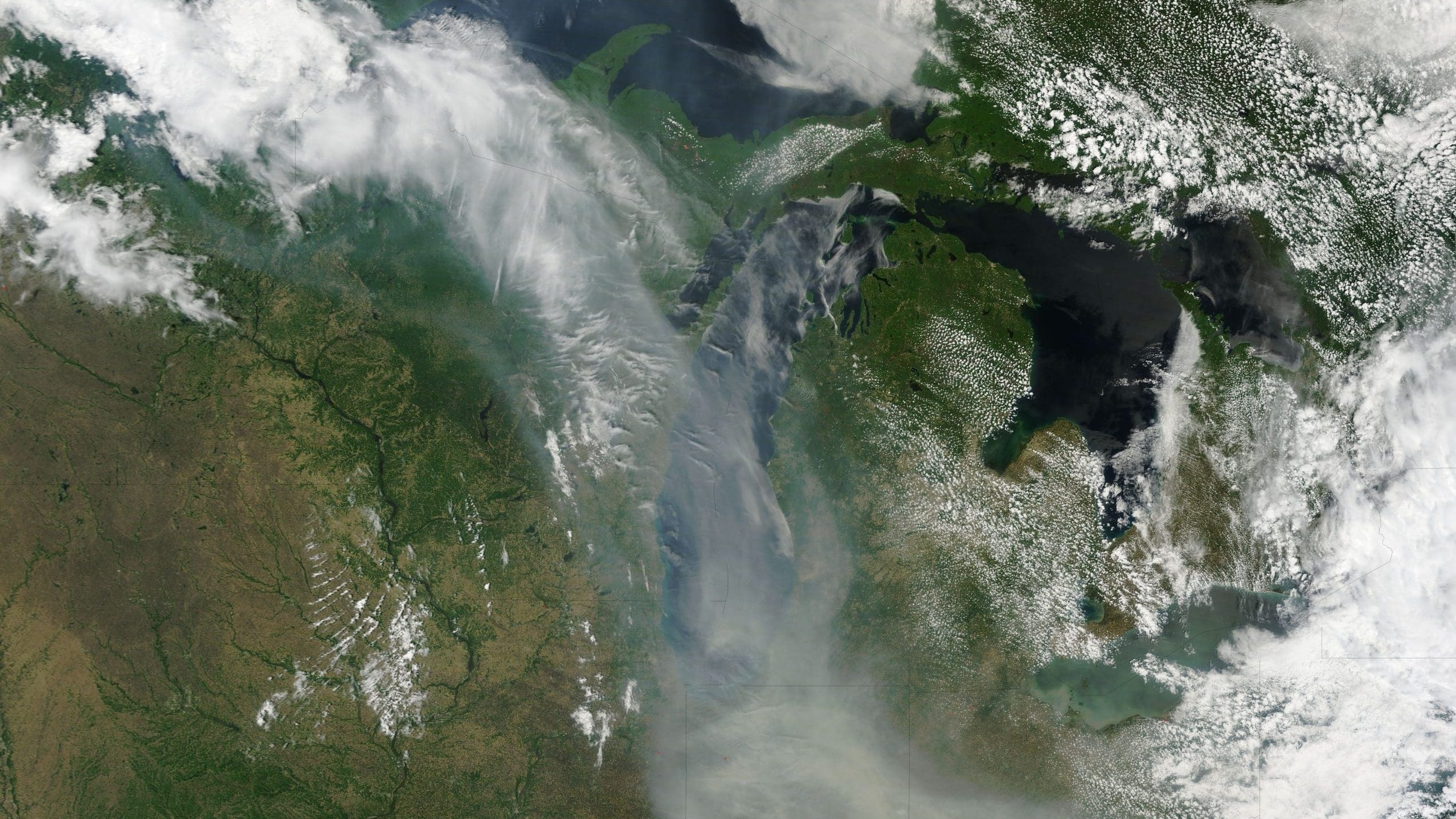
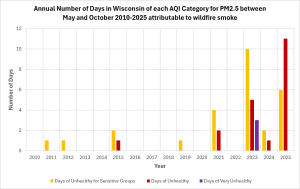
Smoky skies from distant wildfires in Canada and the Western United States have becomes an increasingly frequent occurrence here in Wisconsin. Between 2010 and 2020, wildfire smoke led to unhealthy air quality in the state less than one day a year on average. However, since 2020, wildfire smoke has created unhealthy air an average of nine days a year (Figure 1).
This trend is likely to continue as climate change is a driving force behind the increase in wildfire smoke days. Hotter temperatures, prolonged droughts, and strong winds contribute to ideal conditions for more frequent, intense, and longer-lasting wildfires in North America.
These smoke incursions sometimes lead to Wisconsin’s air quality ranking among the worst in the world. The main pollutant of health concern in the smoke is fine particulate matter, very small particles in the air (about 1/30th the diameter of human hair). Due to their small size, fine particulate matter can get deep into our lungs and cross into our bloodstream. Beathing in fine particulate matter pollution is associated with a range of health effects including heart and lung diseases, cancer, dementias, and early death.
Alarmingly, emerging research suggests that particulate matter in wildfire smoke is more harmful than particulate matter from other sources like traffic or industrial emissions. For example, a study in California found that exposure to particulate matter from wildfire smoke was 10 times more dangerous than particulate matter from other urban sources with respect to respiratory hospitalizations and pediatric emergency room and urgent care visits.
This increased danger is thought to come from the different chemical composition of particulate matter from wildfire smoke. Particulate matter is made up of a variety of different compounds, depending on the source, and particulate matter from wildfire has more compounds with greater potential to damage cells in the body.
When the air is smoky, you can protect yourself by keeping track of the air quality (to check your local air quality, go to reputable websites like Airnow.gov) and staying inside with windows closed when the air reaches unhealthy levels.
If outdoor activity is necessary, well-fitting N95 masks can help block the particulate matter from smoke, which cloth and surgical masks can’t do.
Bigger picture, wildfire smoke is another tangible reminder of how climate change is affecting our lives. Increasingly smoky skies underscore the importance of a rapid transition to clean energy rather than building more polluting fossil fuel infrastructure that further contributes to climate change.
The faster we can reduce our greenhouse gas emissions and slow climate change, the more summer days we will be able to enjoy outside without worrying about whether the air is safe to breathe.
For more information about wildfire smoke and its effects in Wisconsin, see our Environmental Health Initiative research brief at cleanwisconsin.org/scientific-research.
