

In recent years, Milwaukee residents have faced increasingly severe flooding events that have left homes damaged, streets submerged, and families struggling to recover. From historic flooding in 2010 to the record-breaking storms in August 2025 that dropped more than 14 inches of rain in parts of the region, flooding is becoming a more frequent and costly reality for communities across the city.
These events do not affect everyone equally. Older housing stock, aging infrastructure, limited access to recovery resources, and historic underinvestment mean that many Milwaukee neighborhoods face disproportionate challenges both during and after major storms.
At Clean Wisconsin, we recognize that responding to these challenges requires more than environmental advocacy alone. Through our Resilient Communities Program, we work alongside Milwaukee residents to strengthen neighborhood resilience by advancing community-driven environmental solutions, supporting environmental health initiatives, and expanding access to small-scale green infrastructure practices that help communities better manage stormwater before disaster strikes.
Across Milwaukee’s 30th Street Corridor and surrounding neighborhoods, in partnership with Milwaukee Metropolitan Sewerage District, our team works directly with residents to install rain barrels, rain gardens, trees, and other nature-based solutions that reduce localized flooding while improving neighborhood-level environmental health. But we also know that infrastructure alone is not enough. Building resilience means investing in people, relationships, and the systems that communities rely on when disaster happens.
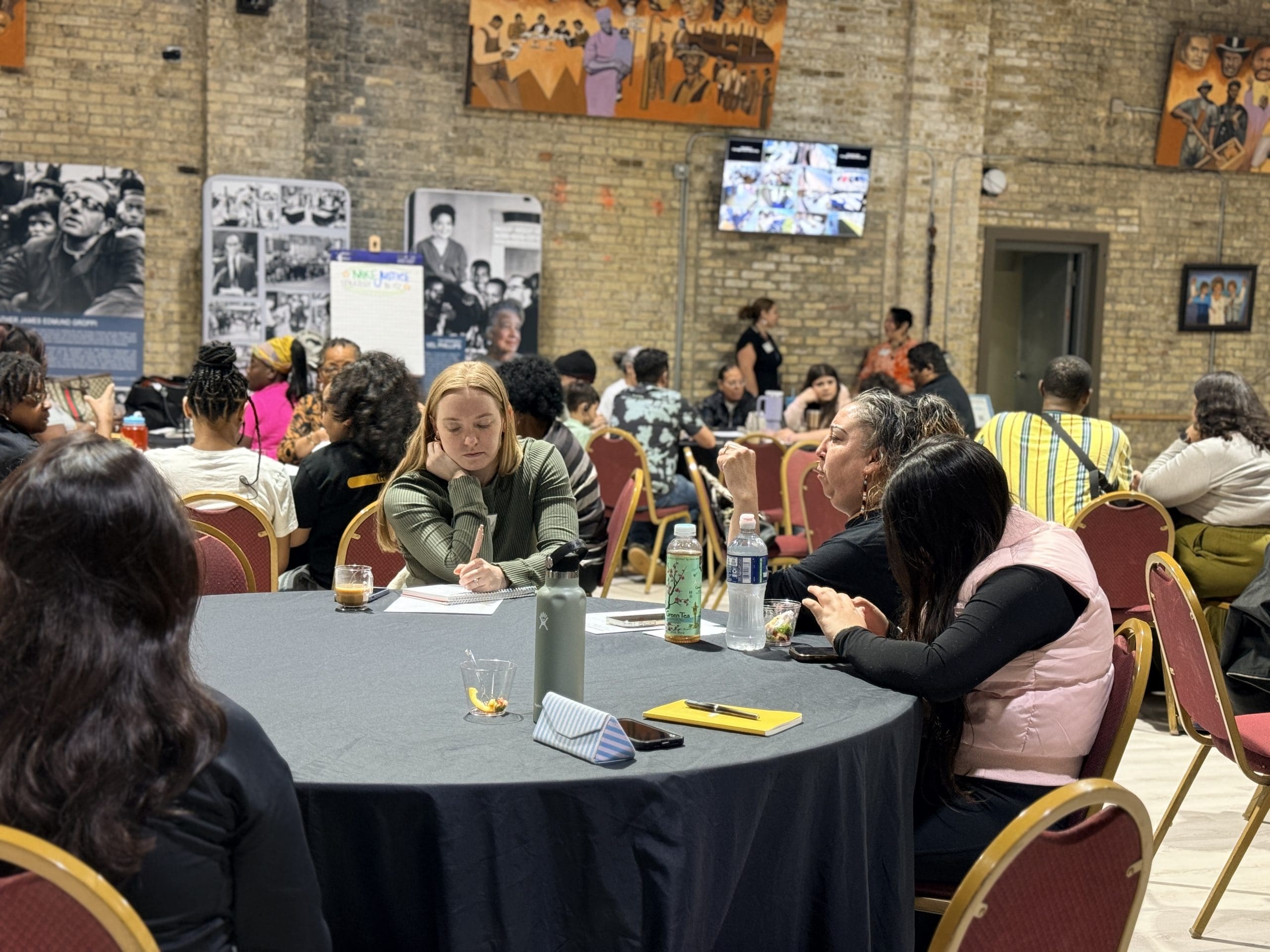
That belief guided the Milwaukee Justice Strategy Blitz: Flooding & Community Resilience, a two-day gathering in May that brought together Milwaukee residents, community leaders, businesses, advocates, artists, researchers, and public agencies to collectively reimagine the future of water justice in Milwaukee.
The Blitz was designed around a simple principle: The people living with flooding impacts every day are experts in their own experiences. To recognize that expertise and reduce barriers to participation, organizers provided stipends to residents who adjusted work schedules and family responsibilities to attend. Interpretation, meals, and dependent care support were also provided to ensure participation was accessible to a broad cross-section of Milwaukee residents.
For many participants, the Blitz felt different from a typical public meeting. Rather than asking residents to react to plans already in motion, the event centered on lived experience, storytelling, and community knowledge. Residents shared personal accounts of flooded basements, damaged homes, financial hardship, lost wages, insurance challenges, and the emotional burden of repeated flooding events. Alongside those stories were powerful examples of resilience, neighborhood support, and collective care.
Throughout the two-day gathering, participants made something clear: flooding is not simply an infrastructure problem. Flooding is a housing, health, economic, and environmental justice issue.
Residents identified slow and fragmented government response systems, barriers to accessing FEMA and insurance support, gaps in communication before and after emergencies, inequities in disaster recovery funding, housing vulnerabilities for renters, and the lack of long-term investment in neighborhood preparedness. Participants also emphasized how neighbors, churches, and community organizations often become the true first responders when formal systems fail.
Beyond the conversations themselves, the event intentionally reinvested funds back into Milwaukee communities with funding support from the Water Foundation. Local businesses and entrepreneurs provided coffee, chai, catering, gifts, and raffle items. The event was hosted at the Wisconsin Black Historical Society/Museum, community artists from TRUE Skool documented the event through graphic note-taking, Spanish interpreters from Equalingua LLC. ensured language accessibility, and cultural performers from Ometochtli Mexican Folk Dance helped ground the gathering in community and culture. From neighborhood cafés and caterers to artists, small business owners, and community-based organizations, event resources were directed toward the very communities working to build resilience.
The Blitz was led by a community-rooted planning team that included Nancy Grimaldo Retana of Clean Wisconsin, Shalina S. Ali of TRUE Skool, Richard Diaz of Blue Green Alliance, and Iris Gonzalez, a local Environmental Justice advocate. Facilitation support was provided by UBUNTU Research and Evaluation, alongside contributions from Flood Hope 500 and Doris Brown of Northeast Action Collective in Houston, Texas, who shared lessons from other frontline communities navigating similar challenges.
While the Blitz has concluded, the work is only beginning. Residents are shaping a community-driven vision for a Milwaukee where disaster response is faster, recovery systems are more equitable, neighborhoods are better connected, and communities are prepared long before the next flood arrives. Building a more resilient Milwaukee starts by listening to the people already doing the work of surviving and responding every day.
