



By Meghan Parmentier, Paul Mathewson, Ph.D., & Kayla Rinderknecht, MPH
Summary
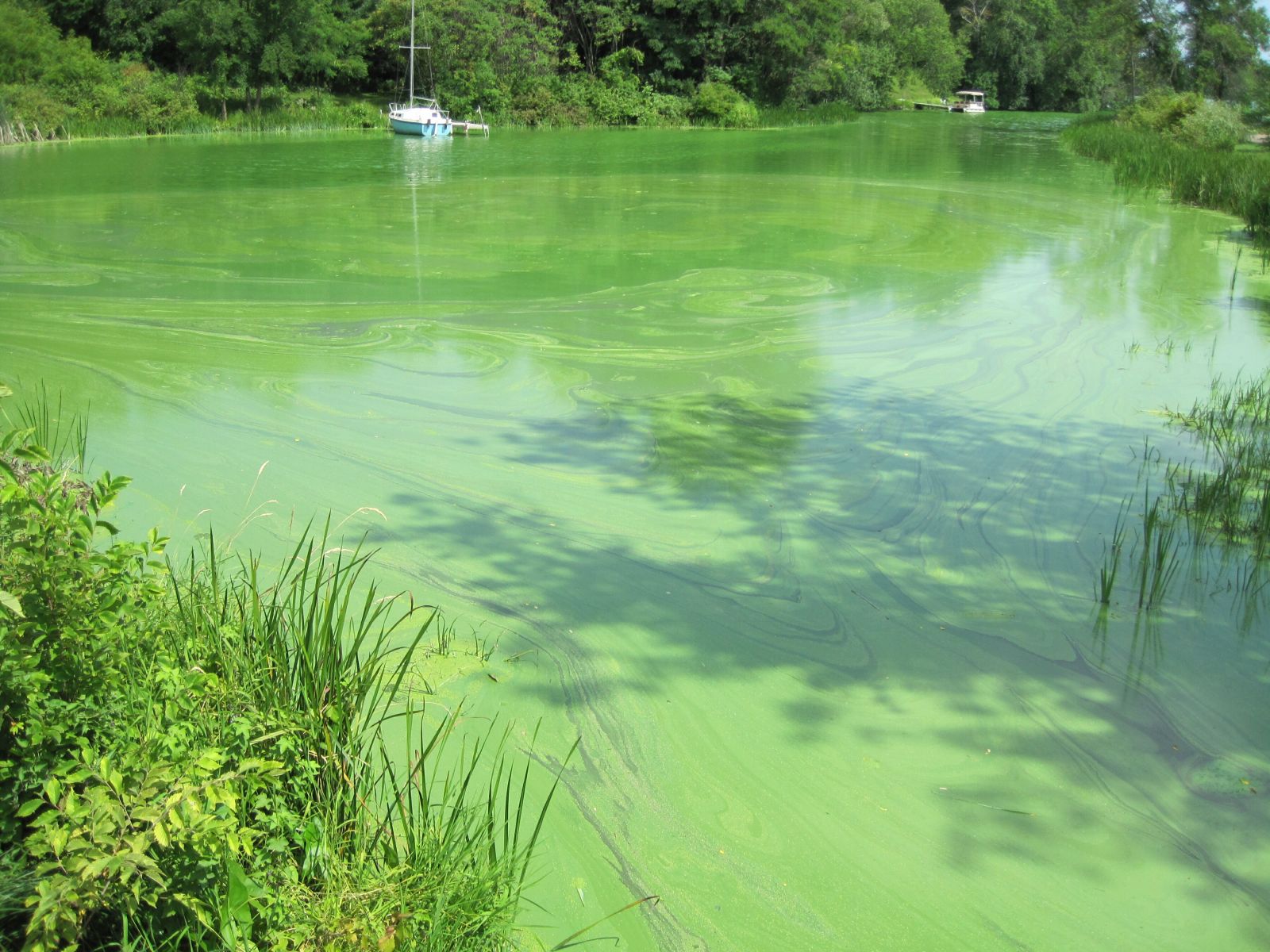
Cyanobacteria (typically referred to as blue-green algae) exist in every aquatic can produce harmful algal blooms (cyanoHABs) that are harmful to people and pets. The prevalence of algal blooms has been exacerbated by human activities like land use changes, historic and current over-application and runoff of nutrients in agriculture, the introduction of certain aquatic invasive species into Wisconsin, and climate change.
Key takeaways:
- Climate change in Wisconsin has resulted in warmer and wetter seasons becoming longer and more extreme, creating conditions for cyanoHABs to grow rapidly throughout the humid summer months.
- In Wisconsin, human activity has increased phosphorus and nitrogen in aquatic ecosystems through expansion of crop and livestock agriculture, urban wastewater discharge, and home fertilizer runoff.
- The Wisconsin Department of Health Services (DHS) has confirmed 99 harmful algal bloom-related illness cases since 2016, with between 4 and 25 reported every year.
- Despite their regular occurrence, there is still a lack of regular monitoring of cyanoHABs and cyanotoxin levels due to the expensive testing and resources required.
- Cyanotoxins are not regulated as drinking water contaminants, which means that local drinking water treatment plants are not required to test their water for cyanotoxin presence. Advisory levels exist for cyanotoxins but are not legally enforceable by federal standards.
