

Where to Listen:




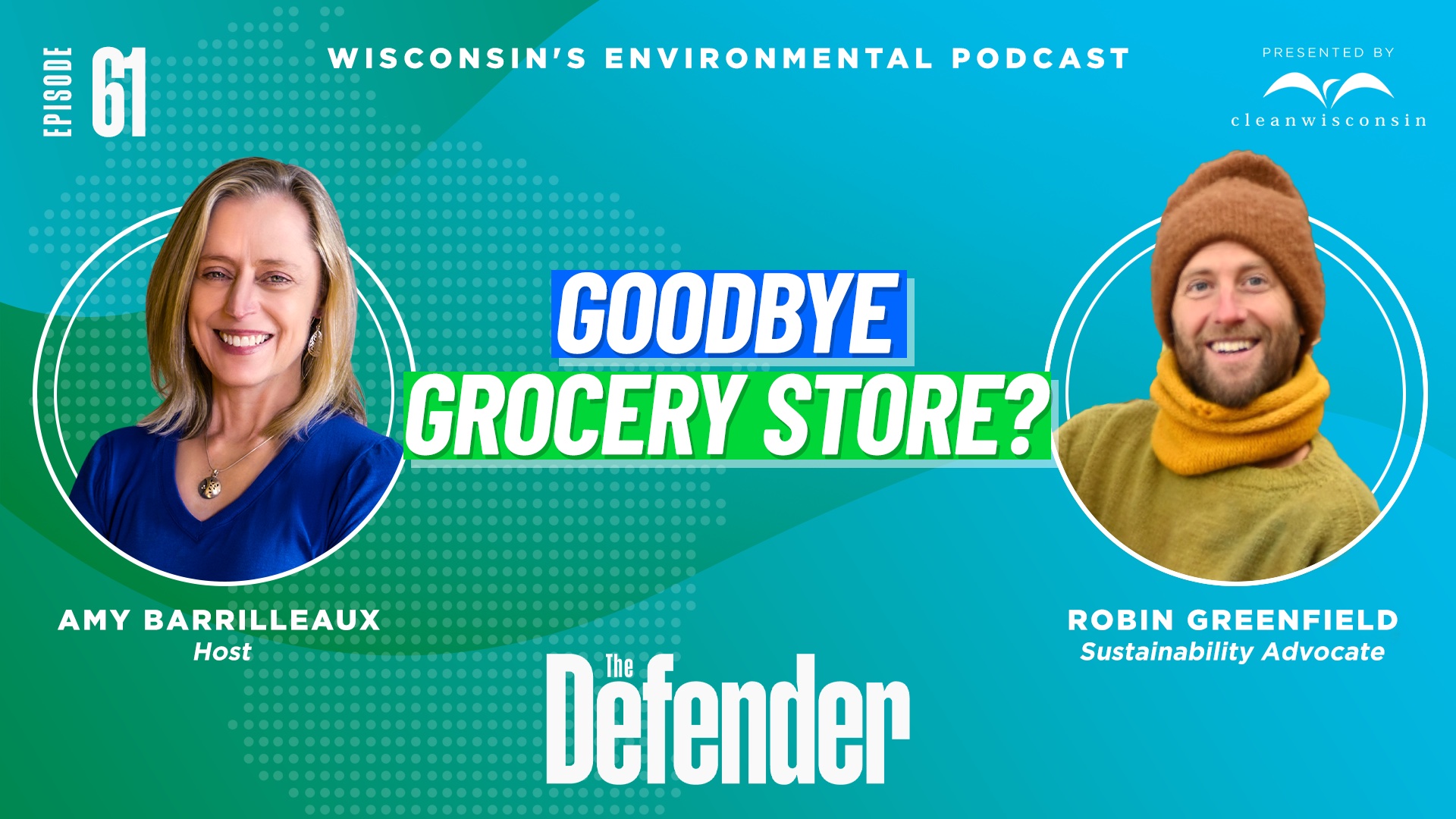
What was the last thing you foraged? Maybe some ramps or morels? But what about your salt, cooking oil, even toothpaste? On this episode, meet the Wisconsin native who is setting out to prove he can survive for an entire year eating only food he has foraged.
Host:
Amy Barrilleaux
Guest:
Robin Greenfield, Sustainability Advocate, Ashland Wis. native
Resources for You:
Food Freedom: A Year of Growing and Foraging 100% of My Food
Robin Greenfield YouTube Channel
Defender Episode 57: Wisconsin’s Forbidden Fruit
Transcript:
Amy Hello and welcome to the Defender, Wisconsin’s environmental podcast. I’m Amy Berrilleaux. The Defender is powered by Clean Wisconsin, your environmental voice since 1970. What was the last thing you foraged? Maybe some ramps or morels? But what about your salt, oil, even toothpaste? On this episode, meet the Wisconsin native who’s setting out to prove he can not only survive for an entire year eating only food he has foraged, but he can also help show the true connection to nature most of us have been missing. That’s right now on the Defender. It’s becoming more and more clear that our modern industrialized food system comes with a growing environmental cost, from erosion and topsoil loss on land that’s been too heavily worked, to drinking water contaminated with pesticides and manure to toxic algae blooms in our lakes every summer. Then there’s all that plastic packaging and highly processed food in the supermarket aisle and the food products that have traveled thousands of miles to get there. It might all have you longing for a simpler, more sustainable, healthier way to get food. And you’re not alone. Joining me is Ashland native Robin Greenfield, who is saying goodbye to grocery stores, to restaurants, even gardens and farmers markets, and is spending a year foraging for everything. Robin, thank you so much for being here.
Robin You’re welcome. It’s it’s a it’s a real joy. You know, I just moved back to Wisconsin this summer after fifteen years of traveling and living in other places and you know, the Defender podcast focusing on the most pressing environmental issues facing Wisconsin. Honestly, I’m really excited to be a part of this scene. I love Wisconsin. We live in a wonderful place and there’s so many of us standing up for for the earth. And I’m I’m just I’m joyful to be here. It’s a powerful place.
Amy Now, before we get into the foraging and I have a lot of questions about that, how did you get interested in doing this in the first place? Did you grow up foraging all the time or what put you on this path?
Robin Oh, the journey. Well, so yes, I grew up in the small town of Ashland, right here on Lake Superior. I grew up in a little house that was it was a duplex. It was my mom and us four kids in a little two and a half bedroom house. It was a small place. Us kids, we fought a lot. You know, we were low income. Life was difficult in many ways. I didn’t have a dad around, and I I always was kind of an outsider. We’re we’re we’re one of the few Jewish commun, you know, few Jewish families. We didn’t practice, but you know, ethnically we’re Jewish. And so in many ways I was an outsider. But where I was an insider was two blocks away was the Hot Pond. And I would go down there and fish from the youngest age that I could. And that’s one of the places where I became me. Also, Prentic Park, catching frogs and turtles. I was basically a little turtle growing up. I just loved to be outside. And so from a very young age, I felt a strong love for the earth and a strong connection to the earth. And I say Wisconsin is in my DNA and Lake Superior is coursing through my vein.
Amy So I mean I think a lot of people think that part of Wisconsin where you grew up is so special. When you come back there now and and think about foraging or living off the land, what about being up there inspires you?
Robin Yeah, well, you know, and I just realized there’s another aspect of the childhood I want to share, and that is I didn’t forage growing up. I grew up as part of this dominator culture where we saw ourselves as outsiders, and where most of the plants we knew it’s because we thought they were bad, like burdocks, like poison ivy, like weeds people are trying to destroy from their yard. And I was in Boy Scouts, I’m an Eagle Scout, and so I we would camp every month of the year, even in the winter, but I didn’t know the plants, and most people around me didn’t know the plants. And so I was as much as I loved the earth, I also loved consumerism. I loved beanie babies and plastic and I wanted to fit into the American dream. I’m saying that with quotations. And so I was I was struggling with the desire for just loving the earth, and then also the desire for for wealth and status. And so I was walking both of those lines. And you know, when I grew up here, I I experienced a lot of depression. There’s a lot of depression in Northern Wisconsin, a lot of people living below the poverty line, and I wanted to get out of here. And I did. And I lived in Florida, I lived in San Diego, California. Definitely for me as a small-town Wisconsin boy, I was living the dream. And I always came back. And just this year I came back and I actually moved here. And there really is I’ve been I’ve traveled all over of around the world, around this country, and there’s a lot of special places. But this place is one of the most special. And you know, honestly, the real reason for that is because, like I said, this place is in my DNA. This place formed me. I have imprinting of the plants, of the animals, and my relationship to them goes so far back that I just feel such a sense of comfort, home, belonging here that I couldn’t get anywhere else on earth. And and no matter where I am, you know, I was walking the California coast last well, the the whole Pacific coast last summer. You know, one of the most beautiful places on earth, but still there was part of me that yearned for the northern Wisconsin homeland.
Amy Well, you got it. It’s it’s winter is here so you’re up there in northern Wisconsin. So you started off life like so many people, you know, in the grocery stores, buying things, kind of living that materialist life that so m many of us live here in the United States and all over the world. When did that change for you? When did you start thinking, you know, I want to live off the land, I want to be more part of nature?
Robin Yeah. So in 2011, I had just moved out to San Diego, California. I had graduated from University of Wisconsin La Crosse, where I went to school for biology and aquatic science about two years prior. And what they didn’t teach me in biology at La Crosse is that I am a part of the ecosystem, not separate from. I learned all of the biology of how the world works, but I was always separate. And so I lived this separate life. And one, you know, not one day, I don’t remember the day, but what happened was I started to watch some documentaries like Food Inc., read some books like The Omnivores Dilemma by Michael Pollan. So here I am just starting to watch documentaries, read books, learn from some different people. And what I learned is that what we call the American dream is the world’s nightmare and the nightmare for billions of people. What I learned is that I was wrapped in this web of consumerism through my daily actions, the food I was eating, the car I was driving, the stuff I was buying, the trash I was creating, the money I was spending. And so I learned that I was ultimately living a hypocrisy, that my love for the earth was not coming out through my daily actions. And so at that time, of course I felt some depression, some overwhelm, some, you know, some maybe some resentment or some anger at. At the government, at the corporations, at society for really hiding the truth behind our societal structures and our daily actions. And so at that point, I set out to transform my life, to bring my actions in alignment with my beliefs. And so one step at a time, I committed to changing what I was doing, changing the food I was eating. So I started to, you know, I started to go to the local food co-op. I was very fortunate to have a food co-op there. And I started to shop at the local farmers market. I started to forage just a little bit of food. I started to grow a little food. I started to harvest rainwater. I got rid of all the toxic chemicals I was using in my house and on my body, you know, the Old Spice deodorant. I thought, why do I use this stuff? And the answer was because they had millions of dollars to convince me that I needed old spice to be a contributing member of society. And it turns out, you know, here I am, it’s 14 years later. I haven’t used the deodorant stick. And now I’m a contributing member of society.
Amy Well it’s interesting that you land on deodorant as the as the line that you cross to continue to be a a contributing member of society, but what you can do without. I think when we think about foraging and only foraging, the thing that we think about is doing without. Like how are we gonna do without this or that or all these things that we feel like we need. So you’ve done this once before, maybe not I I understand you had a garden before, but you kind of went through a similar experience before. What was the thing that that you felt you thought you were gonna need, but you didn’t really need?
Robin Sure. Yes. So in 2019, after eight years of having been transforming my life, I set out, 2018. I set out on a year of growing and foraging all my food. So I wanted to test, you know, is it possible to live independent of this destructive global industrial food system? I was based in Orlando, Florida for that. So I, you know, I had I had the year around growing season and personally I like to be warm. And so that was a big part of it. But that was a big thing, letting go of the peanut butter and the chocolate and the olive oil, those were really big ones for me. And and but I made it through that year. It was challenging. It was it was definitely very challenging. A year with nothing packaged or processed, nothing shipped long distances, you know, down to the salt, the oil, the spices, the calories, the fat, the protein, everything. And I gardened in people’s front yards. I didn’t own any land. And so I turned people’s front yards into gardens. And at the end of that year, you know, I had really honed in my skills. I saw that food and medicine is growing freely and abundantly all around us. And I actually spent a couple months of that in northern Wisconsin. And so this year I set out to see now, can I? Do this without gardens. Can nature be my garden? Nature be my pantry and nature be my pharmacy. And so today’s day 55. I began on October 9th. I gave myself three months of preparation. So I started prep July 1st. And I’m just about two months into foraging every bite, every drop of my food and medicine. And what am I missing? What I’m missing is time and convenience. It it’s it is a bit it is a good amount of work. And to be able to just pop into a restaurant, it’s not so much the actual foods, it’s the it’s the convenience and time that would be nice. And then also being able to have others cook for me. Because nobody else is foraging 100% of their food. And and I actually have to forage the food myself, or people can forage with me. So that’s the most challenging part. And then last I’ll add to that is oil. Sam Thayer, you know, Wisconsinite, he talks a lot about the yellow bud or bitternut hickory, and that’s a wonderful source of oil. And I harvested them, but I have not processed them. I have enough for about a gallon of oil, but I just haven’t had the time to turn it into oil. So that’s the main thing I’m missing right now, is is oil. Cooking oil. And then also I have not dialed in the herbs, the spices yet. Like my food’s tasty. Most people who try my food are like, are like, wow, that’s really, really good. And I’m always like, really? That’s great for either. But I’m still lacking in the spice realm because during my year of growing and foraging, I leaned in on all the garden herbs. And now it’s like, can I make truly tasty meals just from what’s growing out here, you know, outside of the domesticated garden?
Amy So I think let let’s take a step back because I think we sometimes assume that people know what foraging is. But maybe not, because there’s all kinds of way you can get ways you can get your own food. You can fish, you can hunt, you can as we mentioned, garden. So what is foraging? Like what are you doing to get this food and what are the kinds of things you’re looking for?
Robin Yes. So when it comes down to it, there is no exact definition of foraging. It depends on who you talk to. It depends on what forager you’re talking to, or someone who doesn’t forage who doesn’t know what they’re talking about. So what foraging is for me is it’s harvesting the foods and the medicines. This includes hunting and fishing. So I could say foraging, hunting and fishing, but I just say foraging to make things a little bit easier. That is growing, basically I would say freely without humans planting it, without it being in a domesticated garden. Now, but as soon as I say that, I open us up to a huge gray zone. Because the reality is that that nature does not exist in the confines of the human hand, and it weaves in and out of its relationship with humanity. So for example, wild rice, manoomin, the food that grows on water. That’s incredibly wild. Nobody would not call that foraging. However, it exists in part because of the Anishinaabe people and many indigenous cultures’ relationship over 700 years of being stewards to this plant. And GLIFWC and the DNR help to reseed beds and help it proliferate. And so You know, what is foraging? Once you get into it, it’s critical thinking. The idea of foraging is to deeply question, to critically think. And once you start doing that, you realize, okay, everything is far more interconnected than I thought. And so that’s actually one of the challenges is for me to have to decide, okay, what counts as foraging and what doesn’t. Another small example, I eat a lot of wild apples. Now, some of those are from old farmsteads that are gone that are, you know, non-existent, that you don’t see anymore. And so I also eat plants that are landscaped that are not grown for the food. So in Madison, I harvest aronia berries in front of the gas stations and the banks. Now, so that’s foraging to me very clearly. And then so for me, it’s really I’m just not I’m trying, it’s it’s I’m very diligent about not eating any food or harvesting any medicine that is being intentionally grown as food or medicine that’s being managed by people now. And the last thing I’ll add to that is I eat a lot of weeds. I I eat the dandelions from my mom’s front yard. That’s foraging. And I have a tricky one because I’m doing this year of foraging, but for most people, you don’t have to decide whether it’s foraging, whether it’s growing food, food forestry. You walk into a food forest and you’re like, What’s foraging, what’s growing, it’s all interconnected. And that’s that’s the real point is to connect people to that.
Amy So I have a lot of questions about the kinds of foods you’re eating. I noticed in one of your videos that I was watching that you’re eating the pods of the milkweed.
Robin Yeah.
Amy So I think most people might not think of that as something you can eat. So what are the kinds of things that you’re eating that most people might be like, Hey, you can eat that?
Robin Milkweed pods. I just ate some last night with salmon and wild rice and ramp bulbs and salt that I harvested from the ocean on my trip. And that oh, the milkweed pods are truly one of the tastiest things that I have heard in my mouth. Oh my gosh. The the person who I had over to eat with me, she exclaimed, she said, This is out of this world delicious, the milkweed pods. They’re one of my favorite vegetables.
Amy So how are they prepared?
Robin Well, most people will just boil them shortly. You can eat a little bit raw, but it’s not recommended. They are tasty raw. But you you can just boil them for a short period of time. You can add them in soups and stews. So I’m and so one note on that is some people would say, don’t eat milkweed pods, leave them for the monarch butterflies. And don’t eat ramps, you know, people are over over harvesting those. The truth is is that when you really get into foraging, you learn how to harvest in a way that not only is not detrimental but can be beneficial to the plants. We can one, harvest plants that are considered invasive. And by doing that, with every bite we take, we’re doing an ecosystem service. We can harvest the weeds that people are already destroying, you know. Like, I don’t know how many dollars Wisconsin spends on trying to destroy garlic mustard. When we can eat it, it’s a wonderful food. It’s one of my absolute favorite greens. I was eating it when I was down in Madison a couple weeks ago. And so harvesting plants that are considered invasive, harvesting the weeds, these are great places to start. But with milkweed, for example, we can actually prune the plants when we’re harvesting the milkweed shoots in a way that increases the season in which they’re going to be producing food for the monarchs. And then also we can harvest some of the pods after they’ve gone to seed and we can help to spread them. And with ramps, we just know how much you harvest and we can actually help the patches to proliferate by harvesting the right amount. So when people, you know, the conservation movement says that we should not forage, that is based on a belief that we’re separate. And we really know actually, I mean, looking at indigenous cultures, the most harmonious cultures that exist on earth are the ones who do forage. And the more we forage in a relationship type of way, we can actually be doing an ecosystem service. So I know that didn’t exact exactly answer your question of what all I’m eating, but there’s so much to pack into the short time that we have, Amy.
Amy There is. I mean, like, you know, I have I have a long list of questions. I probably won’t get to all of them. You mentioned milkweed pods are tasty. And I have milkweed in my yard, and so it’s a little too late now, but next season in the fall, I’m gonna harvest them and try ’em out. What are some of the things that you’re eating where you’re like, man, this is so good if only people realized it.
Robin Well, I really like to make my roasted root tea, so that the roasted dandelion, burdock, and chicory, and that’s often considered a coffee substitute, but it’s its own wonderful thing. Harvesting the the parsnip. So we have millions of pounds of wild parsnip growing, more so in southern Wisconsin. And they’re the same exact species as domesticated parsnip, and they’re you know, a wonderful roasted root. I eat a lot of greens. I mentioned the the garlic mustard, that’s one of my favorite greens. Let’s see, wild onions. You know, I love to eat the wild onions. Fish, you know, here on Lake Superior, we actually do have an abundance of fish that we can harvest in a sustainable way. So salmon and white fish. Now, of course, I harvest deer that are hit by cars. Some people call this roadkill, but the deer is walking along as a deer. When it’s hit by a car, it’s still a deer. And when it’s laying on the side of the road, it’s first and foremost still a deer. When we call it roadkill, we other it. And you know, I’ll say that eating deer, roadkill deer, as people would say, is actually a very American thing to do. Not everybody talks about it, but I would say millions of people actually do it. And in fact, In a lot of the counties in Wisconsin, there’s a system where you call in the well, statewide, you get a permit, you can take it home, it’s free. And there’s a lot of places where actually they have a list serve where they’ll call who’s ever on the list until someone says yes, I’ll go pick that up. So it’s actually even incorporated into some of our municipalities. So again, that I feel like that was another subway, but there’s just so much to talk about. And I am honestly oh, mushrooms, you know. I I eat a lot of mushrooms, you know, hen of the woods, chicken of the woods, puff balls. And then you have your, you know, more interesting ones like honey mushrooms or the stinkhorn mushroom, which has a basically like a almost like an egg that you harvest from the ground that tastes like a radish. That’s a really unique one. Of course, wild rice. So many people know about wild rice, but that’s just a wonderful plant that I have as a staple in my diet. And the list goes on. I’m working on making a list of every single food that I’m eating, which I will have published on my website within the month of December.
Amy Wow, and I know it’s it’s a lot of foods because you have to be, you know, looking everywhere for all kinds of different things. You can’t it’s not just going to the store and buying a bagel and cream cheese and and that’s it. You know, you have to get sustenance from so many different places. Are you worried about the sustenance piece? I know you had three months to prepare, so you’ve got some, you know, some berry juice and some other things that y that are full of vitamins, you’ve got some frozen venison, whether it was off the side of the road or some other way that you got it. But are you worried you’re up in really one of the harshest climates that we have in the United States in a lot of ways. It’s wintertime here, there’s snow, it’s hard to find things, I would guess. Do you ever think, wow, am I gonna be okay?
Robin Yes. So a couple the notes on that. First, yes, the berries. I got I want to mention nanny berries, high bush cranberries, and aronia. Those are three incredible berries that a lot of people don’t know in Wisconsin. Also choke choke cherries. There’s a lot and service berries. There are some really incredible berries that we can tune into to harvest besides your blueberries and raspberries and blackberries. So the question, am I concerned? Oh, oh, also black walnuts. You you actually can see, Amy, that my hands are like just dark color and you might have been wondering why. This is staying from removing the husks of the black walnut to eat the nuts, and they are they are delicious. And then also, of course, the hickory nuts as well and hazelnuts. We have an abundance of hazelnuts. Man, we have some serious abundance. So the most challenging thing is not what is available, it’s the time to harvest it and the skills to effectively and efficiently process it. That’s the real challenge. I look out in the world and I’m like, there’s so much food, but I don’t have the time to harvest it. And often my home is full of food that I need to process before it goes bad. Of course, the applesauce and the pear sauce and the plum sauce, can’t not mention those. So I don’t have any concern about getting enough food. The challenging part is whether it’s joyous and satiating enough, but so far it absolutely has been. I’m two months in. I don’t feel a lacking. I lost in the beginning a handful of pounds, about maybe three, four, five pounds. But you know, what do you expect when you give up Ben and Jerry’s ice cream and the jars of peanut butter? You know, you’re gonna lose a few pounds from live transitioning to a 100% off the land diet. That’s a guarantee. And so, but on that note, and some people will hear this and say, Oh, you’re copping out or you’re cheating. I am going to Florida for January and February. Yeah. And that’s not because you have to do it. If I wasn’t doing that, I would have just had to have been more diligent of harvesting more berries, more wild rice. You can I could be fishing and you know, you can harvest deer through the winter up here. I would have just had to put in more work to to harvest to be able to make it through the winter up here. And I was excited about the possibility of doing that. But the reality is that a couple things. One, I like to be warm. I like to be warm, and I’ve been spending winters in Florida and California for a long time. And secondly, I teach a lot in in Florida. And Florida is a place that really needs the knowledge of foraging. It’s one of the most populated, second most populated state in the country, I think. And it’s a place where we’re paving it over with concrete. And it’s one of the most biodiverse places, I would say, on earth. And I really I have a community of people there. We’re we’re we’re teachers and we’re stewards of the land. And it’s an important place for me to be. And also I will be eating coconuts, and that’s gonna be a wonderful part of my time there is eating the coconuts.
Amy So yeah, you know, I’ll say that when I talked to my coworkers at Clean Wisconsin that about this interview and I mentioned that you were gonna be wintering at least partially in Florida, the response was, Oh, well, you know… Not because–I think the visual is that, you know, you would be out here kind of bundled up, stumbling through the snow looking for things to eat. But the reality is you you you have been really diligent about ensuring that you have a bit of a stockpile. So no if you were staying in the winter in Wisconsin, you would have those things to kind of rely on through the harsh winter.
Robin Yeah. I don’t know why it’s such the go to to say, oh, well, if he’s not only in Wisconsin for the whole year, then this whole project is, you know, moot point. It’s unimportant. It’s that’s not who I am. I I travel and I teach, you know. And and not just for the warmth. Like I as an activist, I go where my message is going to bring me. And that brings me to cold places. I’m here in northern Wisconsin. It’s December. It’s been below freezing for the last seven days. It’s gonna be below freezing on my you know, the next fifteen day forecast, and I’m here and I’m doing this. And I again I love the idea of doing it a hundred percent up here and it’s doable, except the salt still needs to be harvested from the ocean. But I’m so excited to be traveling, speaking. I’ll I’ll probably give talks in about a hundred cities over this year, around that. And I’m I’m elated to wherever I go, be teaching that food and medicine is growing freely and abundantly all around us. And who knows, maybe in the future I will stay in Wisconsin for an entire three hundred and sixty-five days and do it. But it’s unlikely. I’ve I am in my DNA as a very young kid, I dreamed of Fiji when I read Doctor Doolittle and I always knew from a kid that I wanted to explore and be a part of other ecosystems and that’s what I will continue to do most likely.
Amy When you go around and talk to people about your decision to do this, what’s the reaction? Have you inspired other people to maybe not go a a year but to go some time without relying on the the grocery store?
Robin Yes, absolutely. The reason that I keep doing what I’m doing is because it’s working. Thousands and thousands of people have, through my adventures that I immerse in, awoken to truths that are hidden behind closed doors about our food system, about the way that we meet most, you know, many of our needs in this consumer-driven societal way. And there’s so many people who are tr transforming their life, you know, and it varies from person to person. It’s not about doing just as I do. It’s about asking the question: Am I living the life that I truly want? Are my actions in alignment with the with my beliefs? And if the answer is no, then it’s what do I want to do differently? How do I want to live more closely connected with the earth and more sustainably and more with community? And so there’s hundreds of ways that we can do that. And we each have to ask ourselves, what are we excited about? What changes do we want to make? And some people that have been a part of my life, they’re just making little steps, little changes. And then other people, you know, I get a lot of messages from people who say, like, I quit my corporate job, I have drastically simplified my life, and I’m dedicating really a substantial portion of my existence to being of service to the earth. And so that’s why I keep going, is because people are radically transforming their life and the there’s a movement of millions of people who know that the system we have is broken and that another way is possible and who are who are taking that other way and and I’m joyous to be part of that journey for many people. And one little story that I’ll share with that that just arrived is there’s a woman who once I started this, she committed, and I keep seeing her popping up on my social media. I I can’t remember her name, Katie or Kelly, I think, who has committed to harvesting one wild food every single day for the year along with me. And she’s done that and she’s learning and she’s harvesting, even if it’s just one dandelion leaf, but every day she’s eating something that she harvests. And that’s that’s a joy to have her along with me doing something so dedicated.
Amy I wanna ask just a little bit more about the foraging also. I I know you’re foraging your your oil, your salt, and your toothpaste. So what is a foraged toothpaste?
Robin Sure, so you can see that there’s some marks on my teeth right now. This is pretty good. Not bad. So actually in January 26th of this year, I immersed in this experiment. I called it the experiment of non-ownership, where I actually gave away everything I own, like literally every physical possession. And I was in Griffith Park in LA. So that includes that I gave away my toothbrush and my toothpaste. And so now I had to figure out how I how do I take care of my tooth without any of these modern things. And so in Griffith Park, I learned about the California Bay Laurel twigs and the leaves. And when I chew them up and swish them around, I spit it out after a minute. It’s so strong when I breathe out, it feels just like I’m gonna use the brand name Listerine, because that’s the one we know. It’s so powerful. So that’s what I was using. Right now I’m using black birch, which is very closely related to our winter green, and that has I’m blanking xylitol, I believe is what’s in it.
Amy Okay.
Robin And so there’s a lot of plants that have natural natural antimicrobials in them. So I have not used a toothbrush, toothpaste, or dental floss since January twenty-sixth. So I’m getting close to a year, 10 months in. And my teeth are important to me. And I’m hoping to not lose them. But this is an experiment that I embarked on is can I take care of my mouth, my oral hygiene, with just the plants that I’m harvesting? And this is an experiment that of course, humanity has lived for you know tens of thousands of years, but not too many people are living that today that I know of, and so it is an experiment. I don’t know how it’s gonna go. And the one thing that I will say, well, coup two things. One, I’m not eating processed sugars, which is one of the real problems. There’s a lot of evidence that you know, humanities who are only eating foods from the earth and not processed foods, that that’s in itself really important. And then secondly, my greatest influence and inspiration is Mahatma Gandhi. And apparently he didn’t have too many teeth when he finished his lifetime of activism. So you can still be a pretty contributing member of society without all your teeth. So that’s a you know, that’s a silver lining if this experiment doesn’t go perfectly well.
Amy Yes, it’s a silver lining but… Still a lot in and to think about. But is so far it looks like your your teeth are they’re hanging in there. So
Robin Yes, they’re doing well.
Amy After you went through this kind of version of foraging last time what did it feel like to be done? What did your you know, I I’m gonna guess you didn’t like run out and get a pint of ice cream, but was it hard for your body to kind of adjust to a more traditional diet if you went back to that?
Robin Yeah. It was it was challenging. You know, the most challenging one honestly, so obvious I live a life of of a lot of privilege. And so to say that one of the most challenging things that I do is go to the grocery store might come across as sounding really off base to some people. But really when there’s so much food insecurity and hunger around the world. But when I go to the grocery store and there’s like twenty thousand different products on the shelves, and almost every single one of them I know is destructive to the people, destructive to the plants and animals, and is so many of them have hit these hidden ingredients. I really don’t like to be in the grocery store. And then on top of that, for what I’ve harvested, like I eat I eat, you know, I eat food that people would pay thousands and thousands of dollars for. That generally, when we pay for convenience, someone else is paying the price. That’s what we’ve learned when we look at our systems is that when there’s convenience, usually what it is is the burden is being outsourced elsewhere to people in other parts of the world, to people in our own communities, to the plants and animals. And so I struggle with that that you know that convenience. And but I’ll say it hasn’t stopped me from my last pint of Ben and Jerry’s. I’ve even I’ve said to myself, this might be my last pint of Ben and Jerry’s forever. Right now I won’t have one for a year, but after this year, will I go back? Only time will tell. I hope I’ve had my last pint, but probably not.
Amy So ice cream. Ice cream is the thing you’re missing.
Robin I will say, fortunately right now I’m not missing it. If I was missing something right now, like if you get me, if you wanna, you know, throw off my day, Amy, and get me thinking about what I could be missing. I’d say a nice warm loaf of sourdough bread out of the oven would be something that I would be missing. You know what I’m missing, what I really miss? Me and my mom would go to the local bakery here in Ashland, Ashland Baking Company, and they make just wonderful little sweet bakery treats. And it was something we just did, and it was so nice to walk there together. And it was a little tradition that we had. And I do miss that, that comfort with of doing that with my mom. It’s it’s something that I miss out on a little bit. So what that means though is I gotta harvest some maple syrup in the spring and dial in making flour from acorns and wild rice and make some sweet treats that me and my mom can eat, and we could walk down to the lake and and you know, sit there on the bench and and eat them together and make a make a new tradition with the foods that I forage.
Amy That’s some that’s some work ahead to do. I think you know, there’s a lot to think about when you talk about our food system. But some people might say, if everybody on this planet kind of abandoned the food system that we have now, the food and agricultural system, and went to something more like foraging, that it would be too much, that there’s there are too many people and not enough places to forage and to gather and certainly not enough time to do it. So what in your mind would be kind of a a first step on you know, or or a partial step for getting people to just a more sustainable place?
Robin Yes, I’m so glad you asked that question. If everybody tomorrow decided to go out and try to forage all of their food, yes, we would have some real pain for the earth and for the ecosystems. However, that is a scenario that people often bring up that’s just completely unrealistic. Because if our society to that level wanted to forage their food, realized the destruction that we’re causing and wanted to transform their life, it would be it would mean that we were questioning our societal structures. It would mean that we’re questioning our ways and that we are wanting to not just do not just forage, but it’s meaning we’re wanting to transform our lives. So foraging is about critical thinking. And yes, there are some foragers who go out and they just take, take, take. And for them, I recommend reading Braiding Sweet Grass by Robin Wall Kimmerer, and that will help with that. But the reality is that foragers learn how to be in relationship with the plants. The more people that would start foraging in Wisconsin and Minnesota and this region, the more plants we would actually have, because we learn how to care for them. We learn what the plants need and we give to them. We help them proliferate. We know the plants, we love the plants. We stand up for the plants. It’s a society that’s ignorant of the plants that is going to let them disappear and go extinct. So Sam Thayer really talks about this very beautifully, and he’s been foraging for 40 years. How we need more foragers. As we have more foragers, we will actually help to revitalize this land. And so for people that are wanting to get started, it’s not about foraging all of your food. That’s a that takes some real skills. So it’s start with one plant. You only need to learn one plant to eat one plant. So you already probably know dandelion. Well, learn how to eat dandelion in a way that’s really delicious. You know, burdock, you know, probably. Well, the roots are edible, and the stalks in the spring are edible and and really actually now that one’s delicious. So learn one plant at a time, and you only, you know, you only need to know one plant to eat one plant. And then start with the weeds. You know, there’s so many wonderful plants that we call weeds. Lamb’s quarter is a great one to eat. And Plantago is a wonderful medicine. You know, red clover makes a nice tea. So start with just one plant and then add one more. And if you learn one plant a month for a year, that’s 12 plants. If you do that for five years, that’s 60 plants. And if you know 60 plants that are growing freely and abundantly in your community, that’s that’s utterly transformational. Even twelve plants is deeply transformational. Five plants is transformational. So just starting with one plant at a time, starting with the weeds, also harvesting the plants that are considered invasive. System service with every single bite. And so we can undoubtedly forage in in harmony with this earth. And anybody who tries to convince you otherwise, I really encourage you, don’t let them get you down because that’s a sign of disconnection from the earth. All humans who have lived in harmony with the earth have foraged, and we can still do that today.
Amy So what’s next for you after this year is up? Where what do you see yourself doing?
Robin Well, one thing I know is that I’ve dedicated my entire life to being of service to the earth. And so I’m 39 now, and so hopefully I’ll have, you know, numerous decades of that ahead. So I will continue my activism, I’ll continue being the change that I wish to see in the world. I’ve made a series of lifetime vows, including to earn below the federal poverty threshold, to not pay federal taxes because of where that money’s really going. I’ve created my own tax system where I donate a hundred percent of my media income from books, TV, etc., directly to grassroots environmental nonprofits, with a focus on indigenous and black-led nonprofits and organizations and activists. So with with 100% certainty, I’ll continue this path of living simply and sustainably and dedicating my time to the best of my ability to being of service. But where exactly I’ll do that, exactly what projects I’ll do, that all is time to be seen. I I guess I’ll mention one thing being here in Wisconsin. I am hoping to create a educational center, a simple living or green living center of sorts where people can come from all over to learn all of these skills of living in harmony with the earth. And so If there’s people that are listening to this out in Wisconsin that are, you know, really into the idea of that. We’re looking to do that through a land trust. And so if someone out there has land, I’ll just go ahead and put that out there. So yes, I’ll I’ll continue to be in Wisconsin. I’m exploring the possibility of this being my roots for the long term, and we’ll see what happens exactly. But yes, so continued work, continued colleagueship with the fellow stewards of the earth, and we’ll see exactly how that goes. One thing I’ll say is that I don’t know what the next project is, and for me that’s a good sign that I’m I’m immersed in this one and I’m I’m here in the now of this project.
Amy Robin Greenfield, Wisconsin native and expert forager. Thank you so much for taking the time to explain all this and talk through these really societal issues with me. I really appreciate it.
Robin You’re very welcome. And for people that wanna begin foraging, you can go to Robin Greenfield.org slash foraging. That is my beginner guide to foraging. And that is gonna link you up with all sorts of Midwesterners who forage. The the database find aforager dot com will help you find all sorts of people who teach. There’s the Midwest Wild Harvest Festival. That’s a great gathering. And then lastly, I will mention my book, Food Freedom, is a deep dive into all of this. And it’s available as a experiment in the gift economy, so it’s accessible to everyone, whether you have money or not. So oh man, there’s so much more to talk about, Amy, but I’m so glad for the time that we’ve had together.
Amy Well you’ll have to come back on and as you’re like wrapping up this year and like really share your experiences.
Robin You can count on that.
Amy And we’ll have links to all those websites that you mentioned in the in the show notes or at cleanwisconsin.org.
Robin Wonderful.
Amy Thank you so much. I really appreciate it. It’s been wonderful to talk to you.
Robin Yes, thank you for all of your work at Clean Wisconsin and to all of your colleagues and I’m I’m grateful to be in service together.
Amy And thank you for listening to The Defender. And if you have something you want me to talk about or comment on the show, send me an email, podcast at cleanwisconsin.org, and be sure to rate the podcast on your favorite streaming app. It helps other people find us. I’m Amy Berilleaux. Talk to you later.
