

What it took to get there
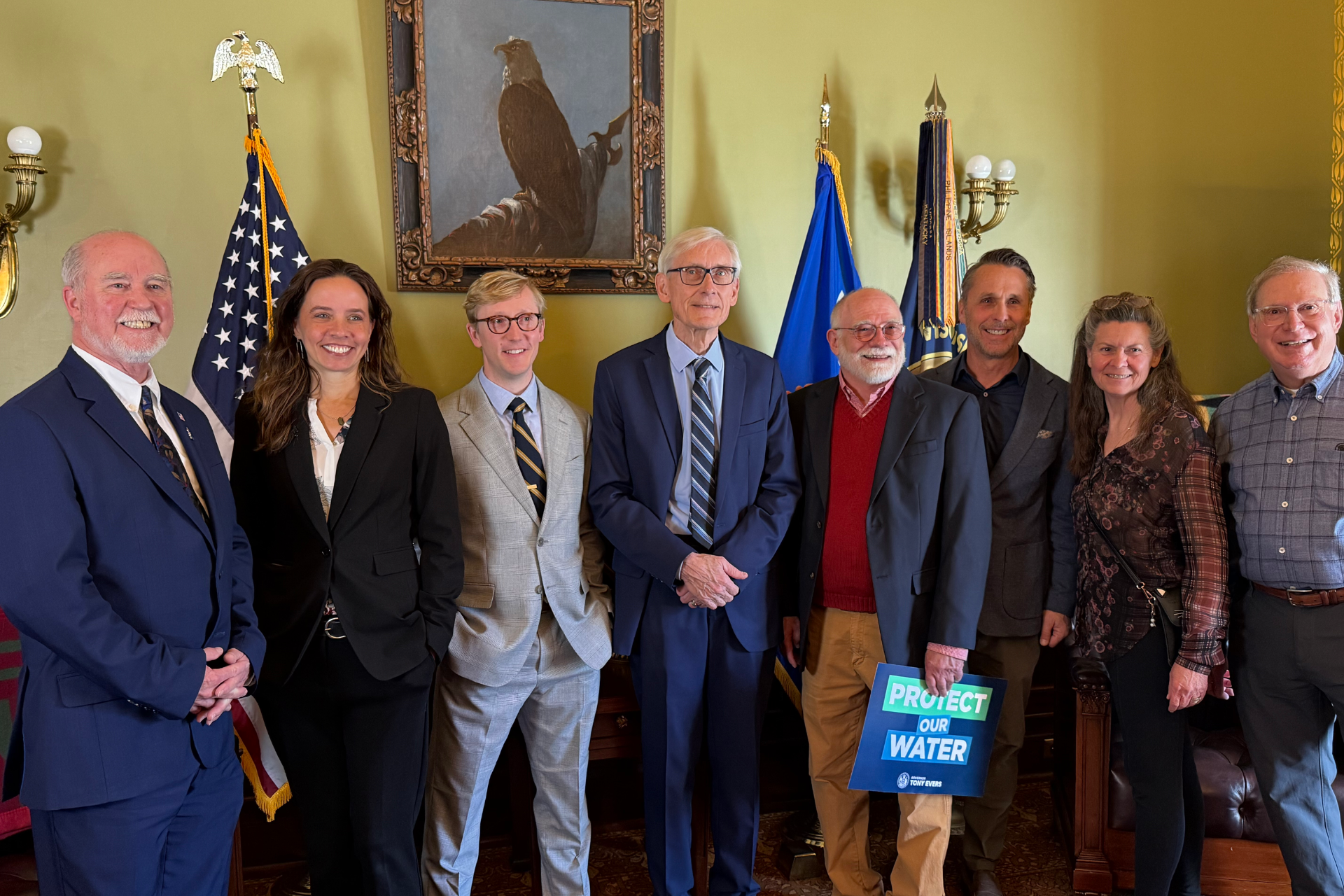
Something extraordinary took place in the Wisconsin State Legislature this spring: the Assembly and the Senate passed complex and important legislation by unanimous votes. Signed by the governor in April, the new measures will release over $130 million to communities whose water has been poisoned by per- and polyfluoroalkyl substances, also known as PFAS.
This legislation—a long-sought compromise among competing interests—represents Clean Wisconsin’s most significant legislative achievement in over a decade. It marks a breakthrough in addressing one of our state’s most persistent environmental and public health challenges. To understand how we got here, some background is needed.
In 2011 Republicans in the legislature engaged in some of the most extreme gerrymandering in the nation, resulting in near supermajorities in both chambers. When Republican leaders adopted policies of refusing to allow legislation to advance when even a single Democratic vote was required, compromise between political parties became all but impossible.
In the 2023-24 legislative session, Senator Eric Wimberger (R-Gillett) and Representative Jeffery Mursau (R–Crivitz) introduced a bill to release funds allocated in the budget for communities suffering from PFAS contamination. The bill contained some provisions that were hard for environmental advocates to swallow but nevertheless seemed promising. But only if parties on both sides could work towards compromise.
It didn’t happen. The Governor and bill authors didn’t talk to each other; it was as if the compromise muscles had atrophied during the years of polarization. Environmental groups urged action but felt stymied by the dynamics.

By the beginning of the 2025-26 session, the team at Clean Wisconsin and the communities we worked with were determined not to let that happen again. The governor staked out a position in his budget proposal, and shortly thereafter Sen. Wimberger and Rep. Mursau introduced a new version of their bill. But the new version still didn’t address many of the Governor’s concerns. Some environmental groups chose immediate and unwavering opposition to the bill. Nothing more to be done.
But that wasn’t good enough for Clean Wisconsin.
For starters, it was intolerable to let another session pass without getting the funds to the communities that desperately needed them.
Second, although Sen. Wimberger and Rep. Mursau’s proposed exemptions to the Spills Law were unnecessary, we knew that the underlying concerns were genuine.
Third, we had the sense that, if you took both parties at their word, they weren’t so far apart.
But how to get the parties talking? Cheering from the sidelines would not be an option this time around. Clean Wisconsin would have to lead the way.
Our water team went to work. We spent days conducting a painstaking, line-by-line analysis of the two sides’ proposals to test for ourselves whether there was a viable path to compromise. Relationships built by our policy team over years gave us critical insights into the bill authors’ motivations, making it possible to suggest solutions and better language to emphasize areas of agreement. Over hours of meetings, the team narrowed down the issues to just five potential sticking points.
We immediately ran this possible compromise by our partners from the communities affected by PFAS. We told them we wouldn’t agree to any provision they weren’t comfortable with.
Then we ran it by other environmental organizations. They didn’t have a lot of hope for it, but they had no problem with our proposal. People had basically given the whole thing up for dead and moved on. There was zero dialogue happening between the governor’s office and the bill authors.
Throughout the spring and summer of 2025, our government relations director, Erik Kanter, engaged in shuttle diplomacy, sharing the proposal with the governor’s office and with Sen. Wimberger and Rep. Mursau’s offices. He managed to convince them that there was a way forward. Sen. Wimberger and Rep. Mursau shared a draft amendment with us in August that went a long way towards our proposed compromise – just not quite far enough.
The team jumped into action again, reaching out to the governor’s office and the Department of Natural Resources, meeting with Sen. Wimberger and Rep. Mursau to demonstrate how the amendment’s language could be improved to achieve their own goals. The response was positive, and the authors agreed to make additional changes.
And then something wonderful happened. After this good-faith gesture by the bill authors, the parties started talking, meeting, and working towards agreement. Over several months, throughout the fall and into the spring of this year, our team engaged closely with everyone involved until a responsible deal was achieved—one that was acceptable to Clean Wisconsin and, so far as it goes, to our local partners. At times setbacks threatened to derail negotiations, but the foundation we built held strong.
In March the Senate unanimously passed two bills comprising this agreement and sent them to the governor for his signature. At last, Wisconsin communities with PFAS contamination would get the help they had been promised.
This story represents Clean Wisconsin at its best. Through hard work, collaboration, perseverance, diplomatic skill, and a laser focus on helping communities achieve what many thought was impossible, our water team secured a true and meaningful compromise in an era hostile to collaboration.
