


Landspreading is the regulated agricultural practice of applying organic waste onto or into the soil as a fertilizer or conditioner. Unfortunately, landspreading contaminated wastes—such as industrial sludges and municipal biosolids—is also one of the major pathways in which per- and polyfluoroalkyl substances (PFAS) enter the environment.
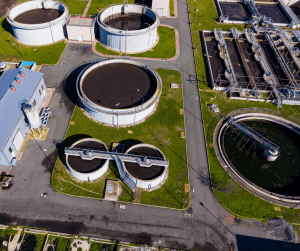
Industrial sludges are solids generated during the treatment of wastewater from industrial operations such as food processing and packaging, vehicle storage and servicing, and metal manufacturing and finishing. Untreated wastewater can contain PFAS leaked or leached from the manufacturing and testing of non-stick, waterproof, and heat-resistant products: nonstick pots and pans, food packaging with protective coatings, and firefighting foam, for example. The PFAS then generally concentrate in the sludge, as conventional treatment processes are unable to destroy them.
Similarly, municipal biosolids are residues also generated during the treatment of wastewater, but wastewater from plumbing systems—sinks, toilets, showers, and washing machines—in private and commercial establishments. Because the wastewater can contain PFAS leaked or leached from consumer products like cookware, hair products, and textile coatings, PFAS are often retained in biosolids.
Both industrial sludges and municipal biosolids are landspread throughout the state and generally do not cause concern. Between 2008 and 2018, permitted dischargers applied approximately 78 billion gallons of waste to over 560,000 acres in Wisconsin. This practice is considered a beneficial use: wastewater treatment facilities cost-effectively dispose of treatment-generated waste, and agricultural landowners and farmers receive nutrient-rich fertilizer for their crops at no cost. And when waste is properly managed for heavy metals, toxic chemicals, and pathogens, the risks to public health are low. But PFAS are not currently regulated in industrial sludges or municipal biosolids, and the environmental and public health implications of landspreading PFAS in waste are virtually unknown.
While there are no federal limits for landspreading waste containing PFAS, the Wisconsin Department of Natural Resources (DNR) started requiring PFAS monitoring in select new and renewed industrial and municipal discharge permits in 2022. The DNR also implemented an Interim Strategy for Land Application of Biosolids and Industrial Sludges Containing PFAS in 2023. Since a 2024 update to the Interim Strategy, the DNR has recommended that permitted waste generators sample and report PFAS concentrations in their industrial sludge and municipal biosolids annually. Data reported by permittees as of January 2026 indicated that 96% of samples had detectable levels of PFAS, though the specific compounds and concentrations were variable. In addition to sampling and reporting guidance, the Interim Strategy also provides a tiered approach for suggested actions based on PFAS concentrations in the waste—landowner notification, additional monitoring, and application rate reductions—but it does not impose requirements on permittees. Thus, there is still limited data about the extent and degree of PFAS in industrial sludges, municipal biosolids, and the land on which they are applied.
The recently passed 2025 Wisconsin Act 201 will tighten some information gaps but leave others open. Act 201 directs the DNR to issue a general discharge permit (anticipated for release in July 2026) that would require all permitted municipal generators who do not already have PFAS conditions in their permits to sample and report PFAS concentrations in biosolids within a year of the proposed general permit implementation date. Act 201 also directs the DNR to include additional limitations or conditions for PFAS in municipal biosolids generators’ discharge permits if sampling results exceed 20 ug/kg for perfluorooctanoic acid (PFOA) and perfluorooctanesulfonic acid (PFOS), individually or combined. However, the land application provisions in Act 201 do not apply to industrial sludge generators, like paper mills and chemical manufacturers. If the proposed general permit is implemented as is, municipal permit holders will be required to comply with these provisions while industrial permit holders will not be subject to additional PFAS monitoring and landspreading conditions until their permits are up for renewal (within five years).
While broad source identification and reduction measures are a start, much more is needed. Remediation is prohibitively costly, so proactive reduction actions, such as staggered product bans to eliminate non-essential PFAS entering the environment, are critical. Likewise, landspreading PFAS-laden waste should be prohibited to protect public health, and landfills receiving the waste should be adequately supported. Additionally, because PFAS have been unknowingly applied to the land for decades, impacted landowners and farmers should be compensated for transitioning their land away from traditional food and livestock production to reduce food chain risks and maintain economic viability. Without additional action, both environmental remediation and public health costs will continue to rise, and much of the burden will fall on innocent Wisconsinites.
