


Whether it’s the mosquito buzzing in your ear or the powdery mildew creeping across your basil plant, pests are a part of everyday life—and most of us want them gone. From Japanese Beetles in the garden to Creeping Charlie in the lawn, we often turn to chemical solutions to keep our homes and landscapes looking their best.
These chemicals—collectively known as pesticides—come in many forms. Fungicides target mold and mildew on plants. Herbicides help maintain that lush, weed-free lawn (and the pristine look of a golf course). Insecticides are commonly used around homes to keep ants and other unwanted insects at bay. Farmers rely on these same tools to protect crops from weeds, diseases, and insects that can damage yields.
Altogether, more than 13,000 pesticide products are registered for use in Wisconsin—across farms, neighborhoods, and indoor spaces. Globally, an estimated 5.6 billion pounds of pesticides are used each year, with over 1 billion pounds applied annually in the United States alone.
Not all pesticides are created equal. Some are more toxic than others, posing greater risks to human health and wildlife. In fact, the U.S. still allows 72 pesticides in outdoor agriculture that have been banned or are being phased out in the European Union due to health and environmental concerns.
And pesticides don’t always stay where they’re applied. They can drift through the air, seep into groundwater, and run off into lakes and rivers—affecting not just the intended target, but also fish, pollinators, wildlife, and people.
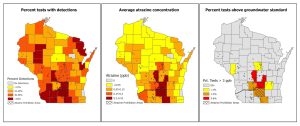
Here in Wisconsin, we’re seeing this movement firsthand. While more than 13,000 pesticide products are registered for use, current water monitoring can test for only 124 compounds. Even within that limited scope, contamination is widespread. In 2024, atrazine—an herbicide banned in the EU since 2003—was detected in over 47% of surface and groundwater samples collected by the state. Another compound, metolachlor ESA, showed up in more than 95% of samples—more frequently than nitrate in the same testing effort.
This matters because about 30% of Wisconsin residents—roughly 1.7 million people—rely on private wells for their drinking water. Exposure to certain pesticides has been linked to serious health concerns, including impacts on the nervous and hormonal systems, reproductive health issues, adverse birth outcomes, and increased cancer risk.
While groundwater standards exist for about 100 chemicals, only 26 pesticides currently have enforceable public health standards in Wisconsin. Over the coming year, Clean Wisconsin will be working to raise awareness of pesticide contamination and advocate for stronger protections, including updated health-based groundwater standards for 21 commonly used or detected pesticides.
In the meantime, there are steps you can take to reduce your exposure. Consider limiting pesticide use around your home and garden, ask your local garden center about safer alternatives, choose organic produce when possible, and—if you rely on a private well—contact your local health department about water testing.
Protecting our water starts with understanding what’s affecting it—and taking action to keep it clean.
