


By Ashlyn Thome & Paul Mathewson, Ph.D.
Summary
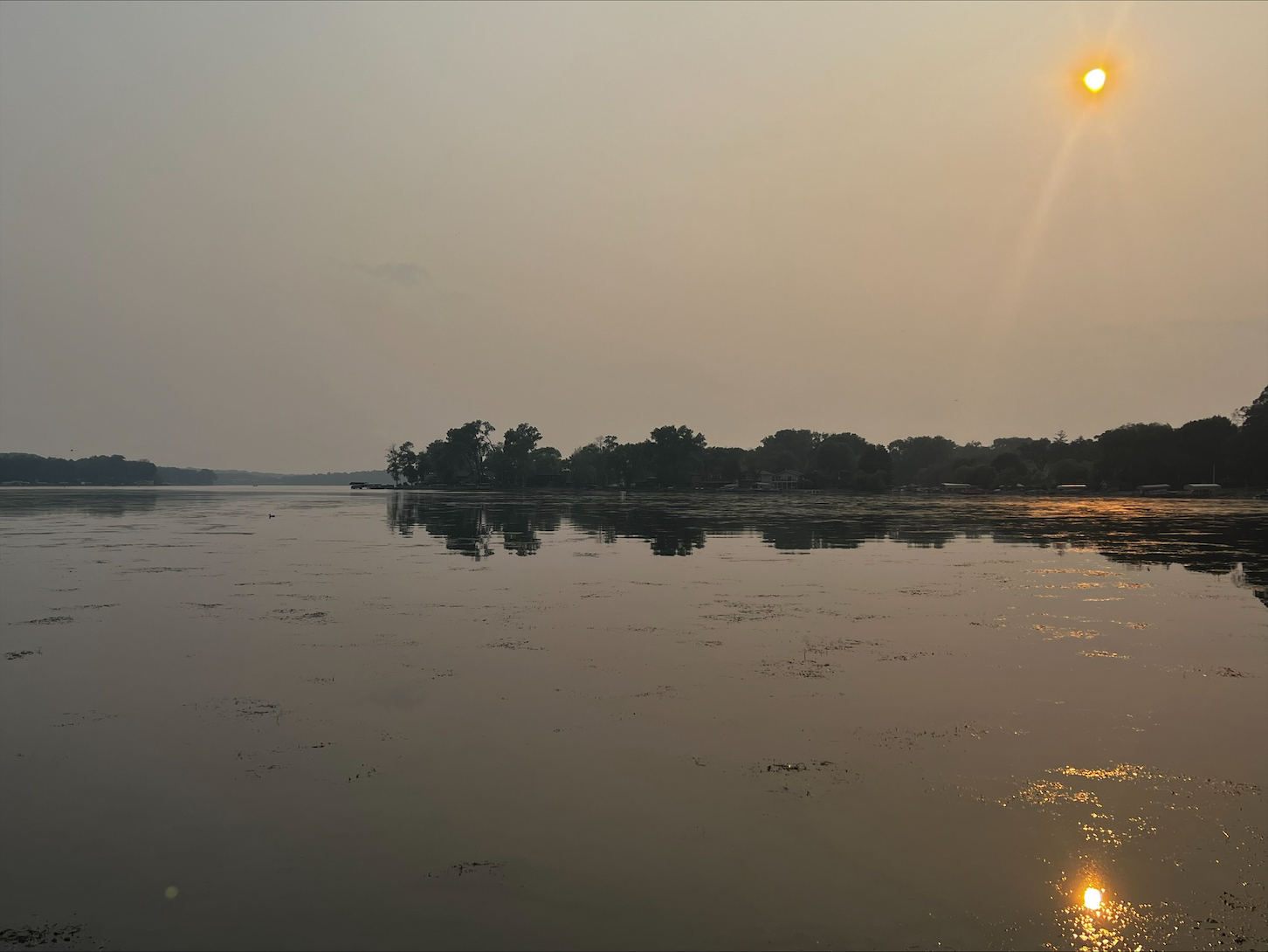
The number of days that Wisconsin’s air quality is affected by wildfire smoke has risen dramatically over the past 15 years, causing increased death and disruption in the state. Fine particulate matter (PM2.5) is the most concerning air pollutant in wildfire smoke, but the smoke also carries precursor pollutants like nitrogen oxides that can be converted to ground level ozone which also damages the lungs and respiratory system. There is evidence that particulate matter from wildfire smoke is more harmful than particulate matter from other sources like fossil fuel combustion. Climate change is a driving force behind the increase of wildfire smoke as hotter temperatures, prolonged droughts, and strong winds contribute to ideal conditions for more frequent, intense, and longer-lasting wildfires in North America.
Key takeaways:
- Wildfire smoke exposure is estimated to account for approximately 250 premature deaths annually in Wisconsin.
- The number of days when Wisconsin’s air quality is affected by wildfire smoke has risen dramatically over the past 15 years.
- On average between 2010 and 2020, wildfire smoke caused PM2.5 levels to be unhealthy in Wisconsin for less than one day per year.
- Since 2020, wildfire smoke has caused PM2.5 levels to be unhealthy for an average of nine days per year.
- A study looking at the health impact of the 2023 Canadian wildfire smoke in the United States estimated that it resulted in over 35,000 premature deaths from the fine particulate matter exposure. Midwestern states were the most impacted, with the smoke increasing fine particulate matter concentrations the most in states including Wisconsin.
- The contribution of wildfire smoke to ground-level ozone concentrations in Wisconsin is particularly important to address due to areas of seven counties in southeastern Wisconsin (Kenosha, Milwaukee, Ozaukee, Racine, Sheboygan, Washington, and Waukesha) not meeting ozone air quality standards.
- Addressing climate change is necessary to decrease the frequency and intensity of wildfires that cause harmful, traveling smoke plumes.
