


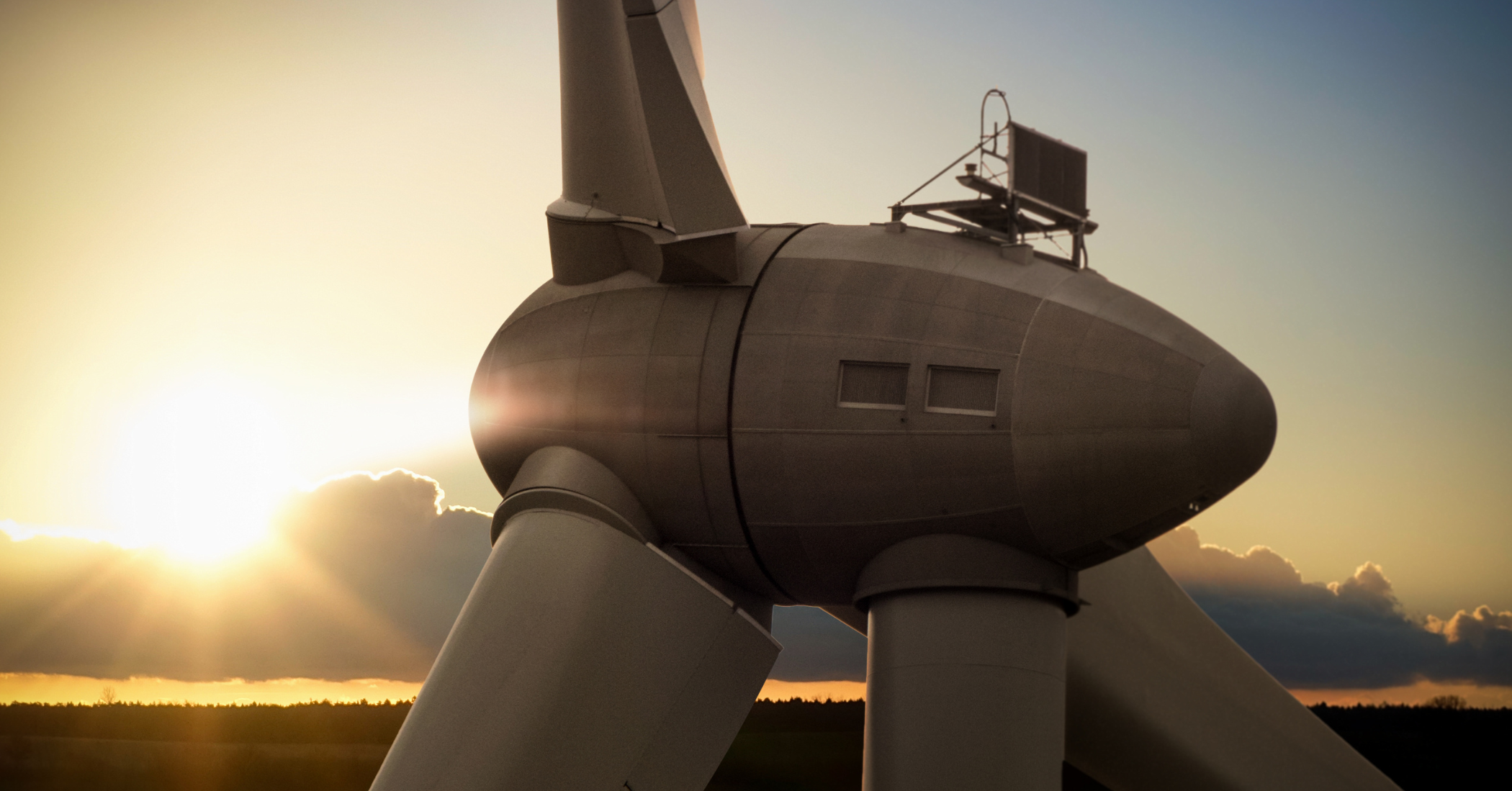
If you’re anything like me, you might not be overly impressed when you see wind turbines in action. To me, it looks like they are turning too slowly to be generating all that much electricity. However, looks can be deceiving. Let’s take a look at how productive these turbines really are.
The basic concept of a wind turbine is the conversion of wind’s kinetic energy (i.e., the energy of an object in motion) into electrical energy that can be transferred along transmission lines to where the demand is (e.g., our homes).
The wind hits the turbine blades, causing them to spin, which in turn causes a rotor connected to the blades to turn. This converts the kinetic energy into rotational mechanical energy. This conversion of wind energy to rotational energy has been utilized at smaller scales for hundreds of years, for example using windmills to grind grains or pump water.
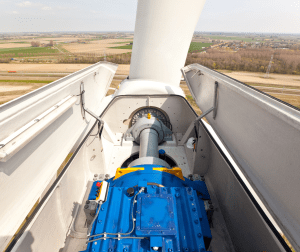
Wind turbines use the same principle, but instead of using the rotational energy to do work, turbines use it to generate electricity. The rotor is attached to a generator which creates electricity that is transmitted to power lines for distribution to the electrical grid.
Looking at a turbine, it doesn’t seem like the blades are spinning all that fast, so how much rotational energy could it be generating? These looks are deceiving for a couple of reasons. First, there is a bit of an optical illusion, particularly when looking at them from a distance. The blades are so large that despite the lower rotations per minute, the blade tips are still moving very fast, well over 100 miles an hour at times.
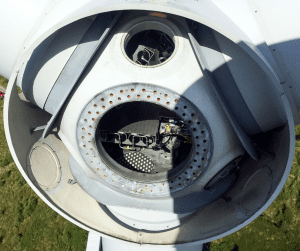
Second, inside the turbines there is a gearbox which transforms the slower rotations of the turbine blades over 100 times, going from 10-20 rotations per minute of the rotor shaft connected to the turbine blades, to over 1,500 rotations per minute for the shaft connected to the electricity generator.
Wind turbines have been increasing in size and capacity in recent years to maximize electricity output. The bigger the turbine blades, the more wind energy it can capture and convert to electricity. Taller turbines are also able to capture wind moving at higher speeds with less turbulence than wind closer to the ground surface. Capturing these higher wind speeds is important because the power generated is proportional to the cube of the wind speed (e.g., doubling the wind speed means generating eight times the power).
Since 2013, the average rotor diameter (the diameter of the circle “swept” by the rotating blades) of a newly installed onshore turbine has increased from about 330 feet to over 430 feet, and turbine height has increased from about 260 feet to about 330 feet. This has led to an increase in capacity from 2 megawatts (MW) to 3.5 MW for the average newly-installed onshore turbine.
So how much electricity do these turbines produce? To provide some relatable context, let’s look at an average 3.5 MW capacity turbine.
In optimal conditions when the turbine is operating at full capacity:
- A single rotation of the turbine blades can power about 25% of a home’s daily electricity use
- It takes about 20 seconds for the turbine to generate enough electricity to power a typical Wisconsin home for an entire day.
- Over the course of one hour, it will generate enough electricity to power 165 homes for an entire day.
However, turbines are not always operating at full capacity, or operating at all, due to inadequate or excessive wind speeds, grid limitations, or other factors like curtailing operation to minimize bird and bat mortality. Even when taking all this into account and averaging typical conditions in Wisconsin across an entire year:
- Every 90 seconds, a 3.5 MW turbine will generate enough electricity to power a typical Wisconsin home for an entire day.
- Every hour, it will generate enough electricity to power 41 homes for the whole day.
So, the next time you look at a wind turbine and think the blades are moving too slow to be doing any work, remember that they are doing more than perhaps meets the eye. Wind turbines are an important part of our clean energy landscape and hopefully having a better understanding of how powerful these turbines are will increase appreciation of them.
