

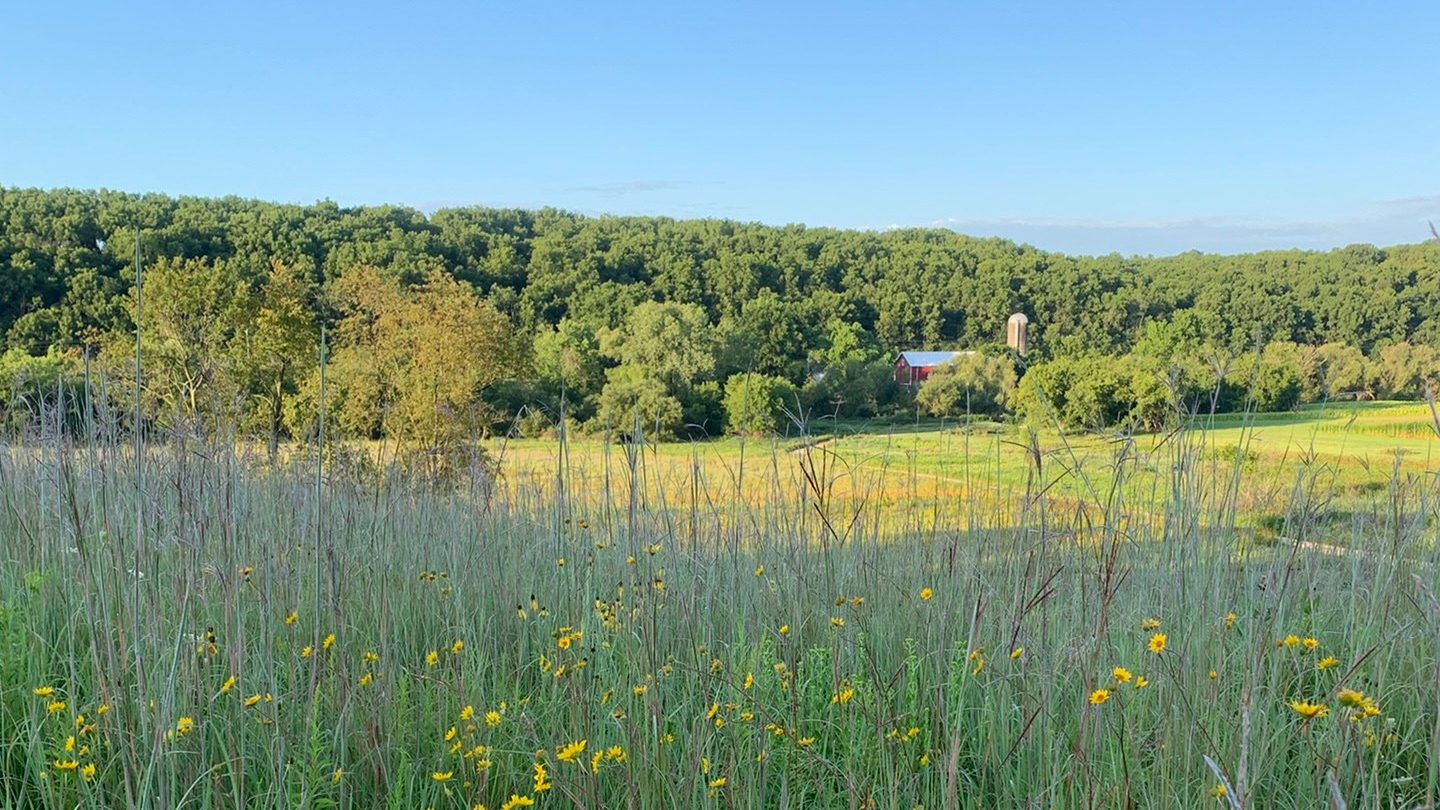
The Natural Climate Solutions Roadmap is the result of a collaboration among farmers, community partners, researchers, conservation professionals, and supply-chain experts to identify ways to transition to vibrant, more sustainable agricultural systems that benefit everyone in Wisconsin.
Supporting farmers and communities
This report reveals opportunities for farmers across Wisconsin to advance practices that will cut greenhouse gas emissions and protect our soil and water. The Roadmap to Net Zero is a first-of-its-kind analysis that uses peer-reviewed science and on-the-ground Wisconsin case studies to show that reducing greenhouse gas emissions to sustainable levels is possible. To protect our climate, water, and rural livelihoods, Wisconsin agriculture needs to take bold steps to reduce fertilizer while embracing more diversity, perennials, and trees. These changes will make it possible to not only reduce emissions, but also improve water quality, reduce flooding, build healthy soils, and enhance wildlife habitat while producing healthy food and supporting thriving rural communities.
Key Findings
- Reducing nitrogen fertilizer use immediately cuts greenhouse gas emissions from agricultural soils while protecting drinking water and reducing farmers’ reliance on high-cost inputs.
- Cover crops and no-till practices in annual cropping systems like corn and soybeans do help reduce soil erosion and limit runoff from fertilizers and manure, but they provide negligible long-term carbon storage.
- Transitioning the one million acres of land Wisconsin currently uses for inefficient corn-based ethanol production to perennial crops and managed livestock pastures significantly reduces emissions.
- Livestock contribute significantly to agricultural emissions. These emissions must be reduced through better manure management, dietary modifications, and other practices.
- Perennial agriculture systems—such as agroforestry, silvopasture, rotationally-grazed pastures, and perennial food crops—offer the greatest greenhouse gas reduction potential. These systems also produce high-value, nutrient-dense food products, improve water quality and soil health, reduce flood risk, and enhance biodiversity.
Case Studies
In support of the overall findings of our report, we developed 3 case studies focused on Natural Climate Solution approaches to agriculture to understand impediments and opportunities for their use in transformative landscape change needed for net-zero greenhouse gas emissions from Wisconsin agriculture:
Kernza Case Study Crop Suitability Case Study Collaborating for transformative change case study